

Physics
Mar 22, 2026
Classical Mechanics
Electromagnetism
Quantum Mechanics
Thermodynamics
Statistical Mechanics
Astrophysics
Why This Geomagnetic Storm Pushed Auroras So Far South — and What It Really Means
A March 2026 G2-G3 geomagnetic storm made auroras visible far beyond their usual range. Here’s the physics behind the southern sightings, why the spring equinox matters so much, an
The striking part of the March 2026 aurora event was not just that the sky lit up. It was where it lit up: well beyond the usual polar zone, into parts of the northern United States. To understand why, you have to look past the pretty colors and into a chain of solar and magnetic events that can briefly reshape Earth’s space environment.
What happened in March 2026?
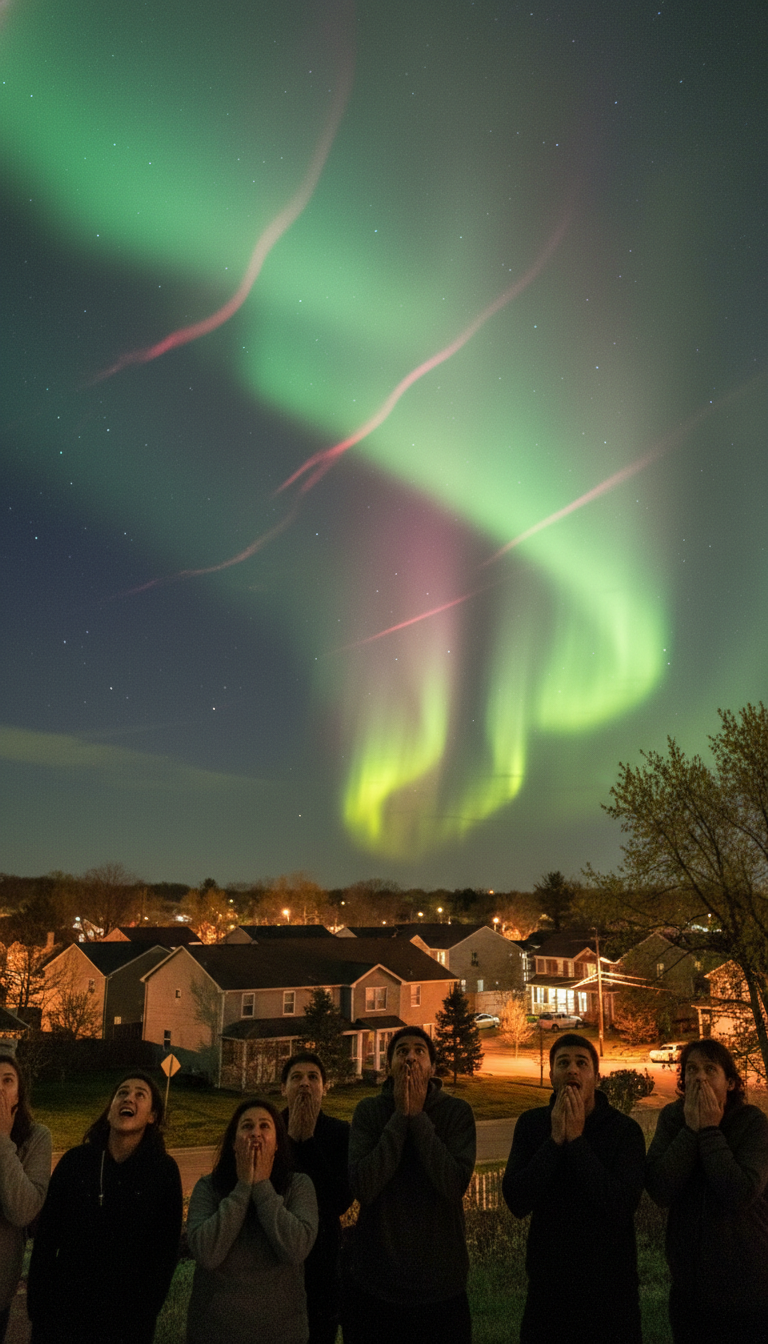
A coronal mass ejection, or CME, launched from an active region on the Sun and reached Earth around March 20-21, driving geomagnetic storm conditions that reached G3, with G2 conditions lingering into March 22. That was strong enough to push the auroral oval farther toward the equator than usual, making sightings possible in states such as Illinois, New York, and Oregon under dark, clear skies.
But a high storm rating alone does not guarantee a vivid display everywhere. Auroral visibility depends on several filters at once: your magnetic latitude, cloud cover, moonlight, local light pollution, and the storm’s exact magnetic structure when it hits Earth.
Why did the equinox make this storm more effective?
The key extra ingredient was timing. Around the spring and autumn equinoxes, Earth’s magnetic geometry is more favorable for coupling with the solar wind. This is often described through the Russell-McPherron effect: the orientation of Earth’s dipole relative to the interplanetary magnetic field makes it easier for the solar wind’s magnetic field to point southward in Earth’s frame.
That matters because a southward magnetic field component, called Bz south, is especially good at reconnecting with Earth’s northward-pointing magnetic field on the dayside magnetosphere. Reconnection opens a pathway for energy and charged particles from the solar wind to enter and load Earth’s magnetic tail. When that stored energy is released, auroral activity intensifies and expands equatorward.
So the answer to one big question is: auroras reached unusually far south because a CME hit during an equinox-favored magnetic alignment, making energy transfer into Earth’s magnetosphere more efficient than it otherwise would have been.
Explore our free physics courses
Classical Mechanics
University · Physics

Electromagnetism
University · Physics
Quantum Mechanics
University · Physics
Thermodynamics
University · Physics

Statistical Mechanics
University · Physics
Astrophysics: From Stars to Galaxies
Free course
How does a CME actually create visible auroras?
The mechanism is elegant and violent at the same time:
- A CME compresses and disturbs Earth’s magnetosphere.
- If the solar wind magnetic field turns southward, magnetic reconnection strengthens.
- Energy is stored in the magnetotail, then released.
- Electrons are accelerated along magnetic field lines into the upper atmosphere near the poles.
- Those particles collide with oxygen and nitrogen high above Earth, exciting them.
- As the atoms and molecules relax, they emit light.
The familiar green aurora often comes from atomic oxygen near 557.7 nm, while red can come from oxygen at 630.0 nm at higher altitudes. Blue and purple tones are commonly linked to ionized molecular nitrogen. These emissions typically occur roughly 100 to 300 kilometers above the ground.

How dangerous is a G3 storm, really?
A G3 storm is not just a skywatching event, but it is also not automatically a disaster. The realistic effects sit between those extremes.
- GNSS and GPS: Positioning errors can increase because the ionosphere becomes more disturbed, changing how radio signals travel.
- Satellites: Enhanced heating of the upper atmosphere can increase drag on low-Earth-orbit satellites, while charging effects can stress onboard systems.
- Power grids: Geomagnetically induced currents can flow through long conductors, especially at higher latitudes, potentially stressing transformers.
- Radio communication: HF radio can degrade, especially on polar routes.
So why were there no major outages despite the headlines? Because storm category is only part of the story. Infrastructure impact depends on duration, local ground conductivity, grid design, latitude, and whether the most damaging magnetic fluctuations line up with vulnerable systems. A G3 storm raises risk; it does not guarantee failure.
Why aurora forecasts are still hard
The hardest variable to predict is often the CME’s internal magnetic orientation before it reaches Earth. Forecasters can estimate arrival time reasonably well, but whether the embedded field turns strongly southward, and for how long, is much harder to know in advance. That is why forecasts for auroral visibility can improve dramatically only in the final hours, once spacecraft upstream of Earth measure the actual solar wind.
In other words, the biggest forecasting uncertainty is not whether a cloud of solar plasma is coming. It is whether its magnetic structure will couple efficiently with Earth when it arrives.
What this means as Solar Cycle 25 approaches peak
This event is part of a broader pattern: Solar Cycle 25 is near its active phase, which means more sunspots, more eruptions, and more chances for Earth-directed CMEs. That does not mean every storm will become extreme, but it does mean more opportunities for both beautiful mid-latitude auroras and real space-weather stress on technology.
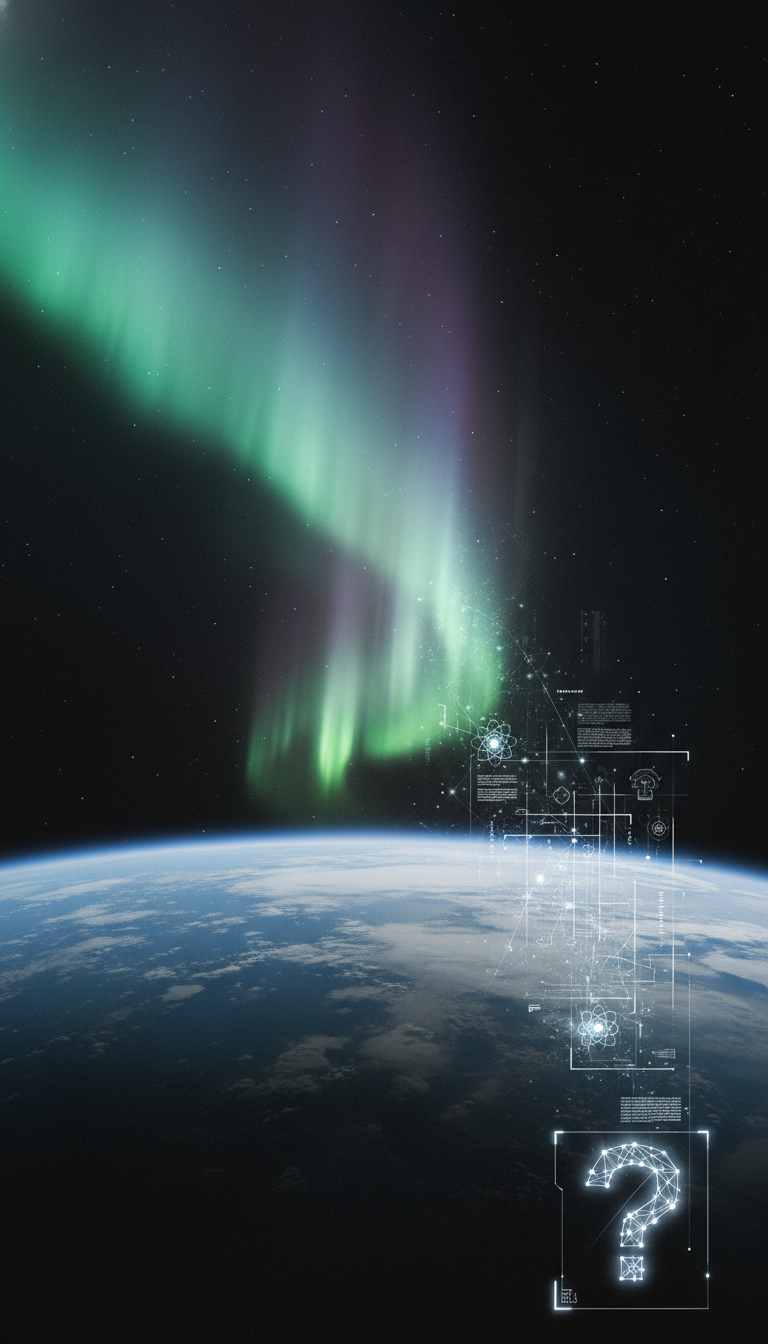
The deeper lesson is that auroras are not random sky art. They are visible evidence of a temporary electrical connection between the Sun and Earth. In March 2026, that connection was strengthened by both a CME and equinox geometry — enough to move the lights far south, but not enough to trigger the worst-case technological consequences. That balance of beauty and risk is exactly why geomagnetic storms matter.