

Natural Science Chemistry
Mar 26, 2026
General Chemistry
Organic Chemistry
Physical Chemistry
Inorganic Chemistry
Analytical Chemistry
Biochemistry
Why Covalently Linking CRISPR to Its Guide RNA Could Be a Big Deal
A new chemistry approach presented at ACS Spring 2026 uses GECX-RNA to permanently link Cas proteins to guide RNAs, aiming to solve a hidden CRISPR bottleneck: guide RNA dissociati
CRISPR is often described as if the protein does all the work and the guide RNA is just an address label. But in practice, the guide can be a fragile point of failure. Preliminary results presented by Wei Sun at ACS Spring 2026 suggest a clever chemical fix: permanently tether the Cas protein to its guide RNA so the complex cannot fall apart mid-job. That sounds simple, but the deeper story is why this matters, how the chemistry achieves it, and what remains unknown before anyone should call it a breakthrough.
The hidden bottleneck: guide RNA dissociation
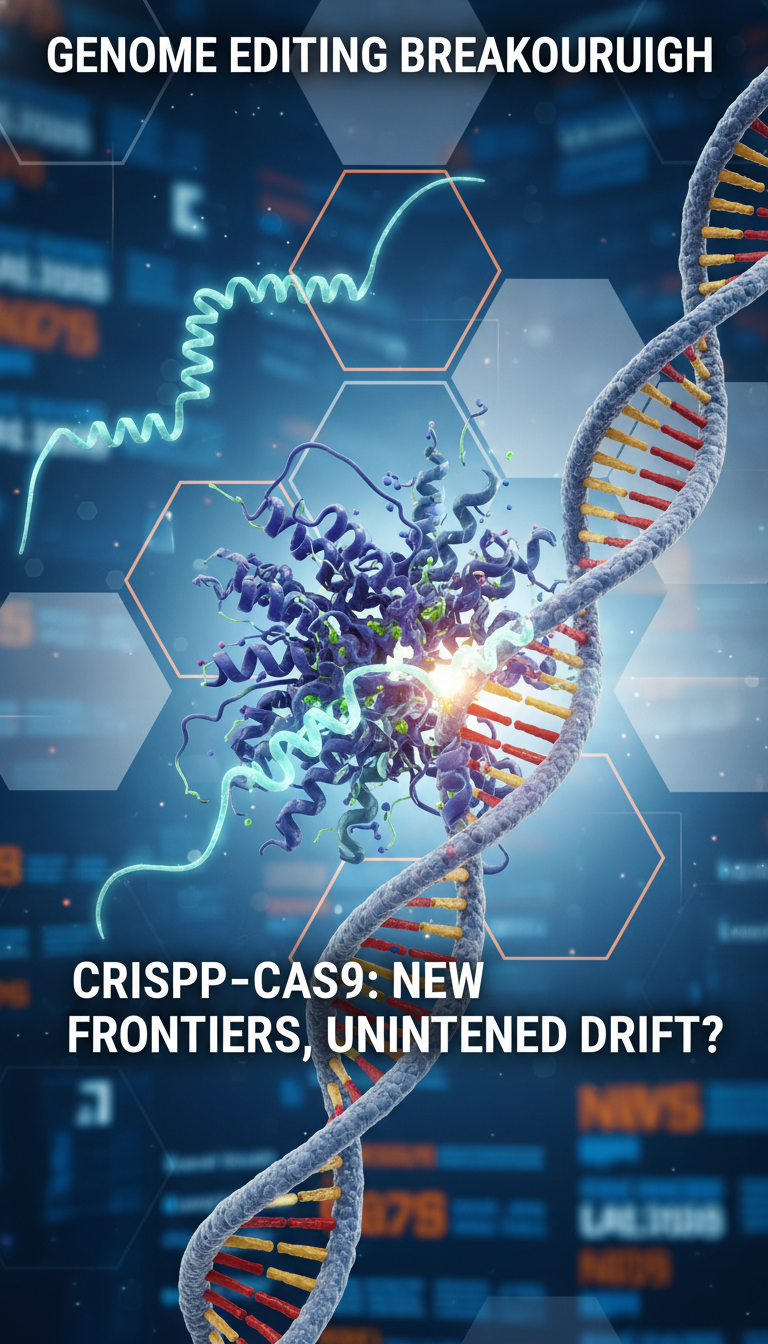
CRISPR systems such as Cas9, Cas12, and Cas13 work as ribonucleoprotein complexes. The protein provides the cutting or binding machinery, but the guide RNA tells it where to go. If that RNA dissociates too early, the complex loses activity even if the protein itself is perfectly functional.
That matters because CRISPR efficiency is not just about whether Cas can cut DNA or RNA in principle. It is also about how long the active complex survives in cells, how often it finds its target before degrading, and whether unstable complexes create inconsistent editing outcomes. In therapeutic settings, where delivery is already difficult, every lost active complex counts.
This is why a covalent bond is attractive: instead of relying on reversible binding between Cas and guide RNA, it turns the pair into a more durable unit.
Explore our free chemistry courses
General Chemistry
University · Chemistry

Organic Chemistry
University · Chemistry

Physical Chemistry
University · Chemistry

Inorganic Chemistry
University · Chemistry

Analytical Chemistry
University · Chemistry

Biochemistry
University · Chemistry
What GECX-RNA actually does
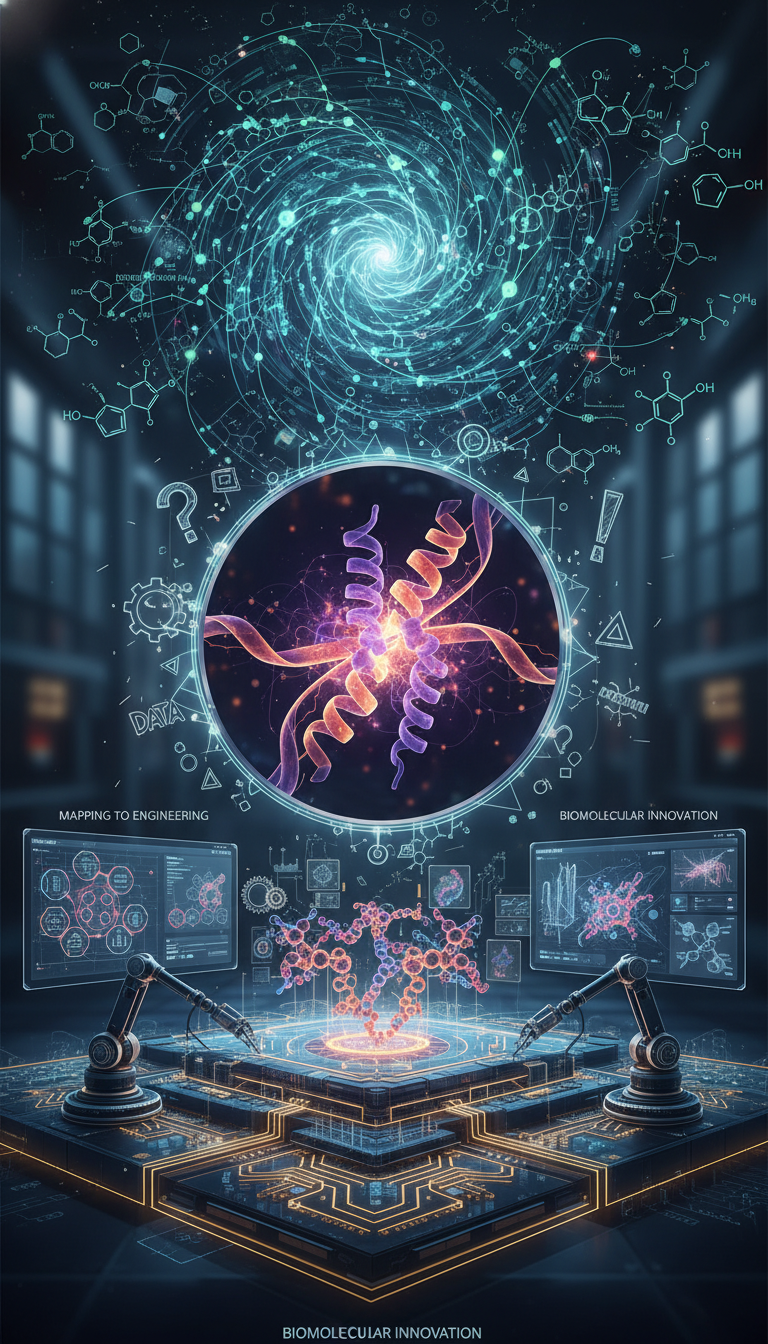
GECX-RNA was originally developed as a protein-RNA crosslinking platform for mapping interactions with high precision. Its key advantage is that it uses genetically encoded click chemistry rather than UV irradiation. In broad terms, researchers place an unnatural amino acid with a reactive handle at a chosen site in the protein, then position a compatible reactive group on the RNA. When the two come close, they form a selective covalent bond.
That gives two major benefits over classic UV crosslinking:
- Site specificity: the bond forms where the chemistry is designed, not wherever UV happens to create damage.
- Broader RNA compatibility: the method can be applied across all four RNA nucleotides, which expands design options.
For CRISPR engineering, that means researchers can choose positions on Cas9, Cas12, or Cas13 that are close enough to the guide RNA for crosslinking, while trying not to disrupt target recognition.
Why this could improve editing efficiency
The most direct mechanism is straightforward: if the guide cannot dissociate, more Cas molecules remain in an active, targetable state for longer. That could increase on-target editing simply by improving the fraction of intact complexes that survive delivery and intracellular stress.
There may be secondary effects too. A permanently assembled complex could reduce batch-to-batch variability in ribonucleoprotein preparation and make multiplex systems more predictable. For Cas13 applications, which target RNA, stabilization might also help in diagnostic or transient knockdown settings where rapid loss of guide function is costly.
But this is also where caution matters. CRISPR proteins are dynamic machines. They must recognize PAM sequences, unwind nucleic acids, and undergo conformational changes. A covalent tether could help stability while also, in some designs, interfering with those motions. So the chemistry is promising precisely because it is site-specific: success depends on placing the bond where it stabilizes the complex without freezing essential movements.
What the early evidence does and does not show
So far, the public discussion centers on preliminary conference data described as exciting across multiple Cas systems. That is notable because a method that works only for one enzyme might be a niche trick, while activity across Cas9, Cas12, and Cas13 suggests a broader platform.
Still, two concrete questions remain unanswered. First, how large are the quantitative gains? Researchers will want fold-changes in on-target editing, durability in cells, and ideally whether off-target activity rises, falls, or stays unchanged. Second, can this be scaled safely for therapeutic use? Incorporating unnatural amino acids and click-compatible components is powerful chemistry, but manufacturing and toxicity must be carefully validated.
At the moment, the idea is scientifically credible and mechanistically compelling, but not yet clinically proven.
What happens next if the data hold up
If fuller studies confirm the early promise, this approach could influence several areas:
- more efficient ex vivo editing for cell therapies
- better-performing CRISPR ribonucleoprotein formulations
- improved stability for Cas12 and Cas13 diagnostic tools
- new design rules for prime editing or other guide-dependent systems
The biggest implication is conceptual. Chemical biology tools built to observe biomolecular interactions are now being repurposed to engineer them. That shift is powerful: instead of merely mapping where proteins and RNAs touch, researchers can lock those contacts in place to change function.
Bottom line
Covalently linking Cas proteins to guide RNAs addresses a real CRISPR weakness that is often overlooked: the guide can fall off. GECX-RNA offers a more precise alternative to UV crosslinking and may improve the durability of CRISPR complexes across several Cas families. The two questions that matter most now are how much efficiency improves in real biological systems, and whether the chemistry can be manufactured and used safely enough for therapy. Those answers will determine whether this is a clever lab trick or a genuine platform advance.