

Natural Science Chemistry
Mar 22, 2026
General Chemistry
Organic Chemistry
Physical Chemistry
Inorganic Chemistry
Analytical Chemistry
Biochemistry
FLASH Radiotherapy: How Millisecond Radiation May Spare Healthy Tissue
FLASH radiotherapy delivers cancer-killing doses in milliseconds at ultra-high dose rates, and early human results are fueling excitement. The deeper story is chemical: the same ra
FLASH radiotherapy sounds almost impossible: deliver an enormous radiation dose in less than a tenth of a second, yet sometimes damage healthy tissue less than standard treatment. That is why it is attracting so much attention in 2026. But the real story is deeper than speed alone. The most interesting layer is chemical: when radiation hits tissue this fast, the radical chemistry may change before normal cells can enter the usual cascade of oxidative injury.
What FLASH is, and why it matters
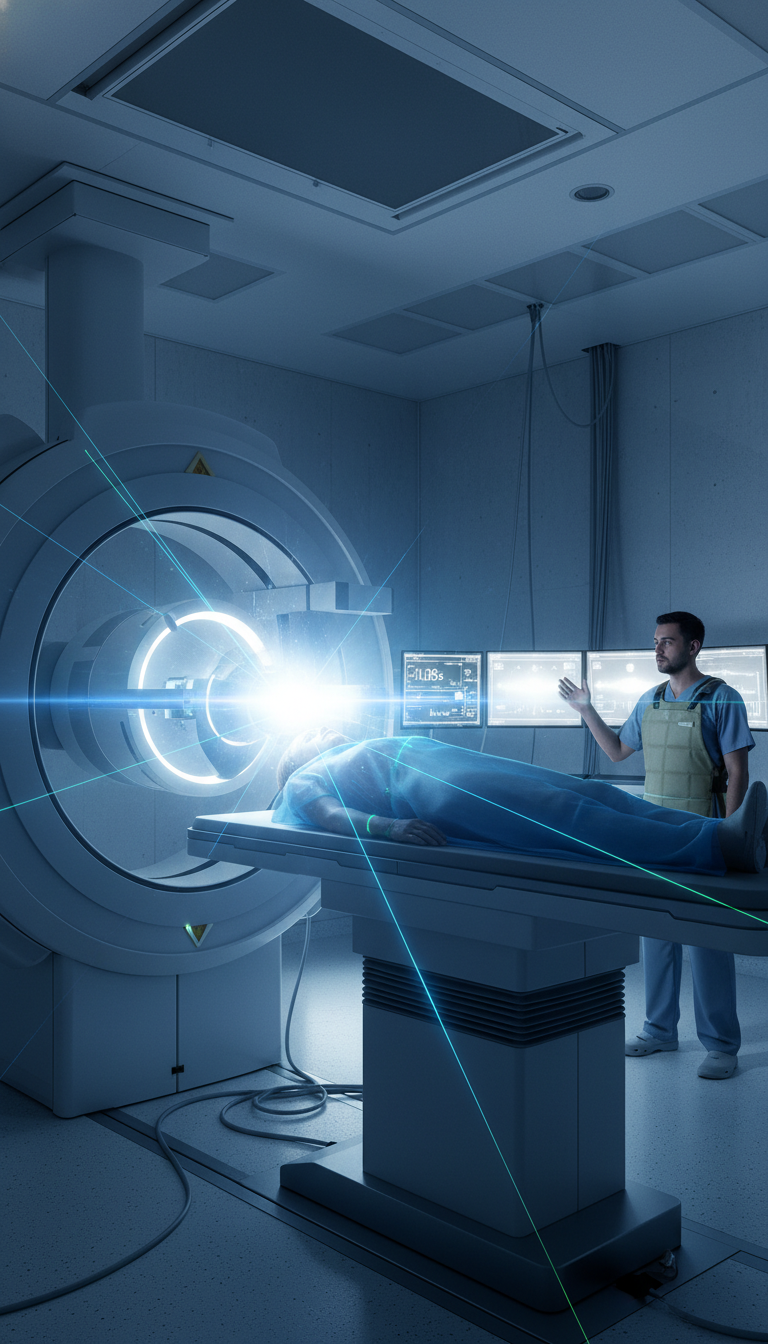
Conventional radiotherapy typically delivers dose over minutes at relatively low dose rates. FLASH uses ultra-high dose rates, often above 40 Gy per second, so the full dose arrives in milliseconds. In preclinical studies, that timing has repeatedly been linked to a striking pattern: tumors are still controlled, while normal tissues show less fibrosis, inflammation, or functional damage.
That does not mean FLASH is ready for routine use. Human evidence is still early. The January 2026 phase I Flash-Skin I study, which treated seven patients with melanoma skin metastases using two 9 Gy ultra-high-dose-rate fractions plus a conventional boost, is important mainly because it showed feasibility and no major complications. It is an encouraging first step, not final proof for all cancers.
Explore our free chemistry courses
General Chemistry
University · Chemistry

Organic Chemistry
University · Chemistry

Physical Chemistry
University · Chemistry
Inorganic Chemistry
University · Chemistry
Analytical Chemistry
University · Chemistry
Biochemistry
University · Chemistry
The chemistry behind the “FLASH effect”
Radiation does not damage tissue only by directly striking DNA. Much of the effect comes from radiolysis of water. Because cells are mostly water, ionizing radiation rapidly creates reactive species such as hydroxyl radicals, solvated electrons, hydrogen atoms, and downstream oxygen-derived radicals.
Under ordinary dose rates, these species have time to feed chain reactions. Oxygen helps convert initial radicals into peroxyl radicals (ROO•), which can propagate lipid peroxidation, amplify membrane damage, injure mitochondria, and contribute to DNA-associated oxidative stress.
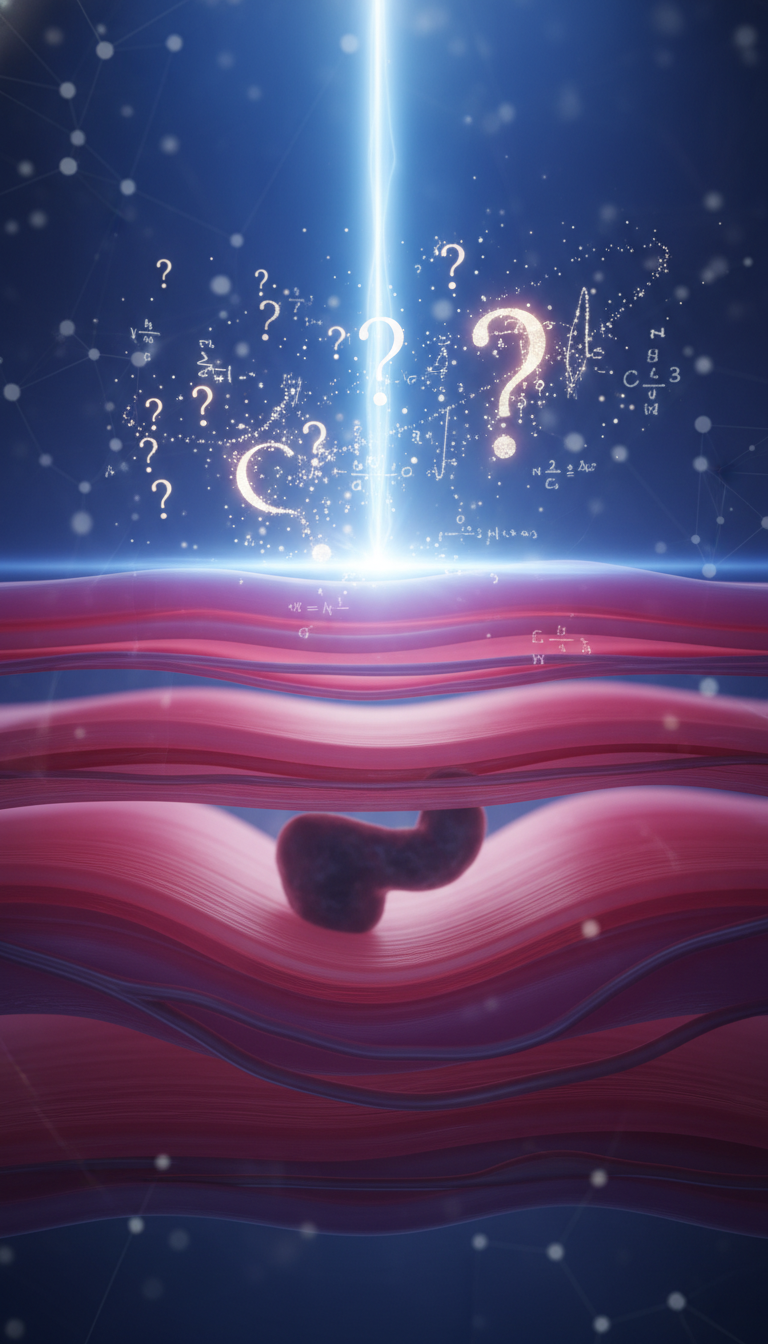
At FLASH rates, chemists think the local radical concentration becomes so high, so quickly, that radicals collide with each other and recombine into less damaging products before those chain reactions fully spread. In that view, the key is not just “less oxygen,” but a different reaction network: more radical-radical termination, less sustained oxidative propagation.
Why oxygen depletion alone is probably not enough
A popular explanation says FLASH works because it instantly consumes oxygen, temporarily protecting normal tissue. Oxygen likely plays some role, but by itself this model has a problem: in many settings, the amount of oxygen depletion needed to explain the full protective effect appears unrealistically large at clinically relevant doses.
That is why the radical recombination model has gained traction. It better fits the idea that normal, oxygen-rich tissues are especially vulnerable to oxidative chain chemistry under conventional delivery, and especially likely to benefit if FLASH interrupts that chemistry early. Tumors, meanwhile, are often already hypoxic and biologically stressed, so they may gain less protection from this shift.

What the evidence shows so far
The evidence comes from three levels:
- Preclinical biology: many animal studies report reduced normal-tissue toxicity with preserved tumor control.
- Radiochemistry: models and bench experiments support altered radical kinetics at ultra-high dose rates, especially involving peroxyl-radical formation and termination.
- Early human trials: the 2020 proton FLASH treatment for bone metastases and the 2026 skin trial show clinical feasibility, but not yet broad long-term proof.
What remains uncertain is tissue specificity. Skin, lung, brain, gut, and bone may not share the same threshold conditions. The exact beam structure also matters: total dose rate, pulse dose, pulse spacing, oxygenation, and particle type can all change the chemistry.
Why deep tumors are the real engineering test
Electrons can achieve FLASH more readily, but they do not penetrate deeply enough for many internal tumors. Protons and carbon ions are more promising for deep targets, yet generating true FLASH conditions with accurate dosimetry is much harder. That is where accelerator physics enters the story: hospital systems inspired by high-energy physics, including CERN-linked technologies, are being adapted to deliver these beams safely.
This is also where cost and access become major issues. If FLASH requires rare, expensive machines and highly specialized quality assurance, its benefits could remain concentrated in a few advanced centers unless simpler delivery platforms emerge.
So what actually makes FLASH spread, and what happens next?
FLASH is spreading because it offers something unusually compelling: a plausible way to widen the therapeutic window, killing tumors while reducing collateral damage. The excitement is driven by a rare combination of factors: a strong clinical need, surprising early human feasibility, and a mechanism that is chemically credible even if not fully settled.
What experts think happens next is more cautious than the hype. Expect focused trials first in tissues where delivery is easiest and toxicity is measurable, especially skin, superficial lesions, and selected proton-accessible targets. At the same time, researchers will test which part of the mechanism matters most: radical recombination, transient oxygen effects, mitochondrial signaling, immune responses, or some combination. If those thresholds can be mapped reliably, FLASH could become not just a faster way to deliver radiation, but a chemically distinct form of radiotherapy.
Bottom line: FLASH is not magic and not routine care yet. Its promise comes from radiochemistry: when dose arrives in milliseconds, the balance between damaging radical chain reactions and harmless radical termination may flip. That is the deeper reason this field matters.