

Natural Science Chemistry
Mar 22, 2026
General Chemistry
Organic Chemistry
Physical Chemistry
Inorganic Chemistry
Analytical Chemistry
Biochemistry
Why a Single Indium Atom Can Beat a Nanoparticle at Turning CO2 Into Methanol
ETH Zurich researchers report a single-atom indium catalyst on hafnium oxide that boosts CO2-to-methanol productivity by about 70% over a leading benchmark. Here’s the mechanism, t
At first glance, this sounds like a familiar climate-tech headline: a new catalyst turns CO2 into fuel more efficiently. But the deeper story is more interesting. The ETH Zurich result is not just about getting a better number. It shows that a material long treated as almost catalytically boring, hafnium oxide, can create the exact microscopic environment that lets single metal atoms outperform bigger, more intuitive particles.
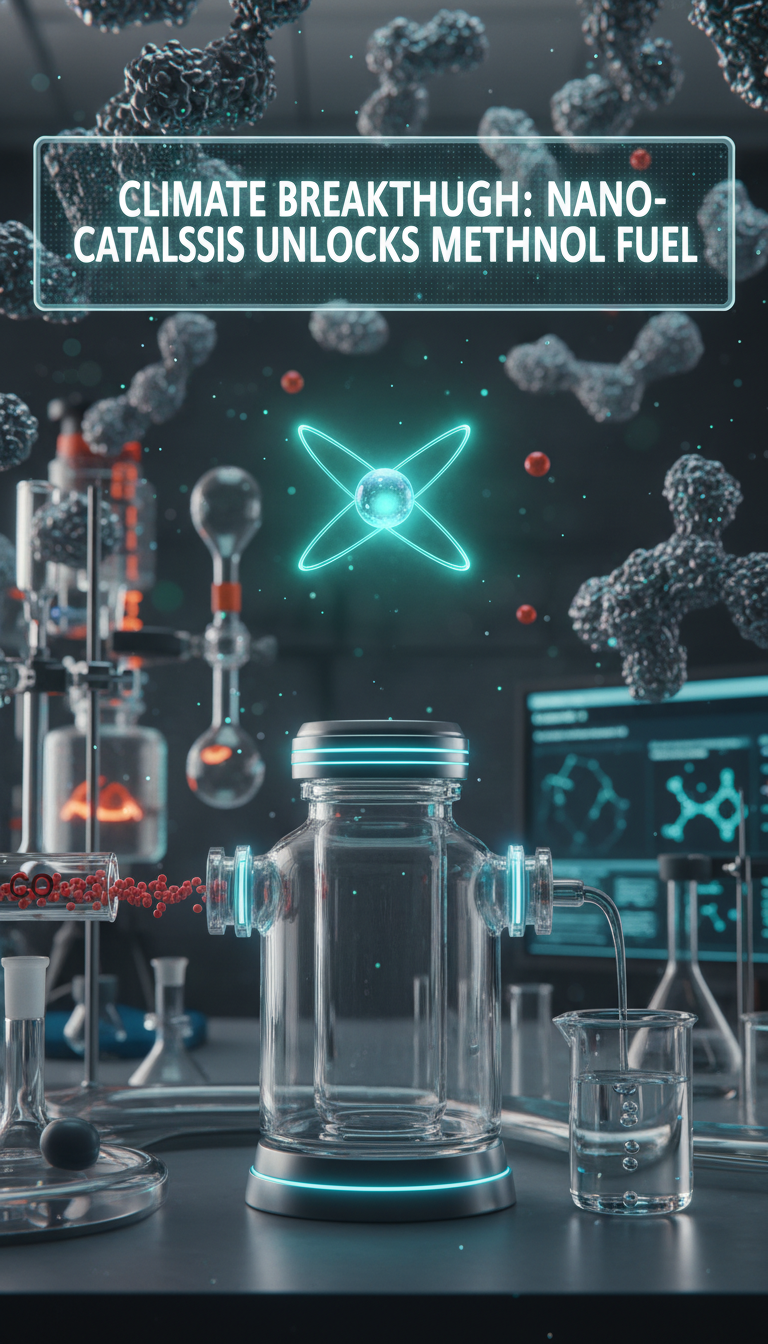
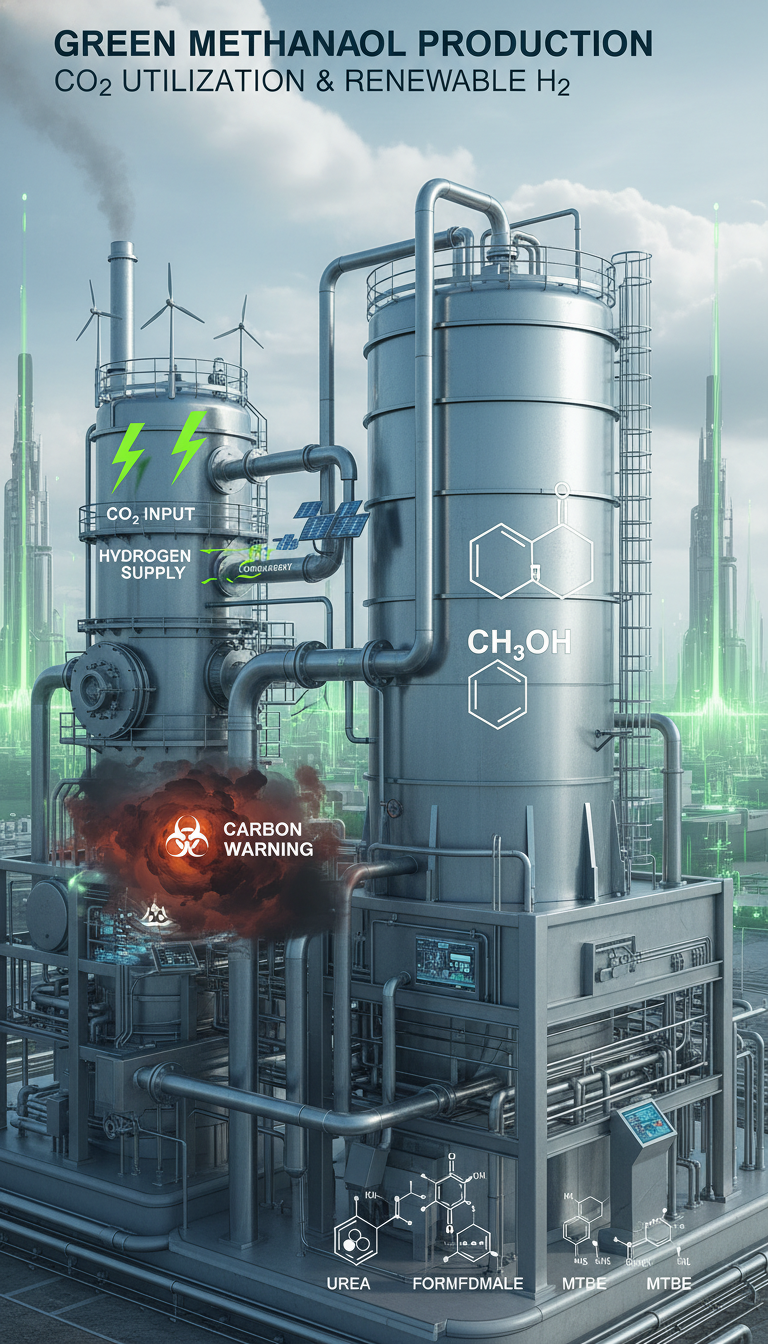
That matters because methanol is a serious industrial molecule: a fuel, a hydrogen carrier, and a feedstock for plastics and chemicals. If CO2 hydrogenation can be made more selective and efficient, it could help close part of the carbon loop. But this is still a thermal process that needs hydrogen, heat, pressure, and careful reactor engineering, not a magic direct-air-to-fuel shortcut.
What the breakthrough actually is
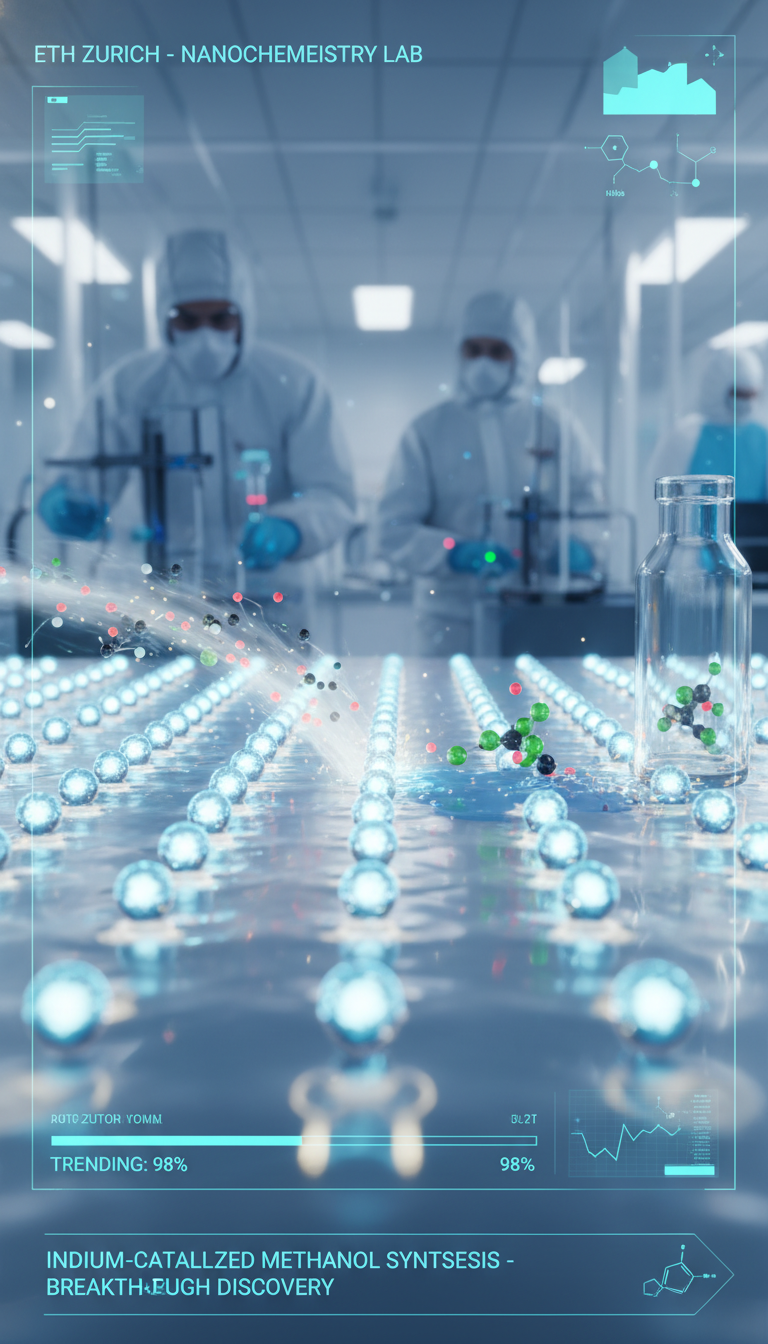
The reported catalyst consists of isolated indium atoms dispersed on monoclinic HfO2, made by flame spray pyrolysis. Under industrially relevant conditions, around 300°C and 50 bar, it delivered up to 70% higher indium-specific methanol productivity than a strong prior benchmark based on indium and zirconia.
That phrase matters. The gain is measured per indium atom, meaning the catalyst uses the metal more effectively rather than simply using more of it. In catalysis, that is a major advance because expensive or scarce elements become more practical only when each atom does more work.
Why single atoms beat nanoparticles here
Normally, people expect nanoparticles to be better because they offer many active surface sites. But in this system, larger indium clusters and particles appear to open less selective pathways, especially the formation of carbon monoxide instead of methanol.
Explore our free chemistry courses
General Chemistry
University · Chemistry

Organic Chemistry
University · Chemistry

Physical Chemistry
University · Chemistry

Inorganic Chemistry
University · Chemistry
Analytical Chemistry
University · Chemistry

Biochemistry
University · Chemistry
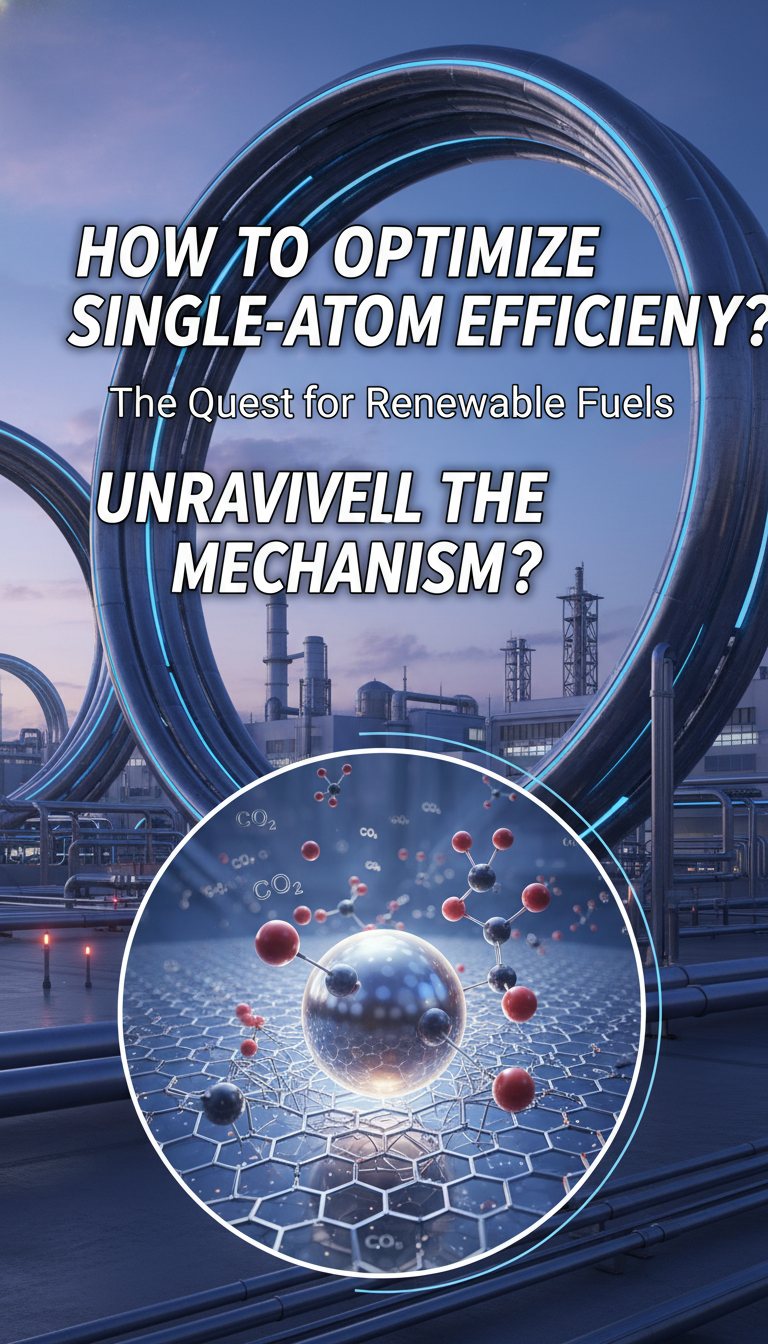
Single indium atoms behave differently because their electronic environment is tightly defined by the oxide support. On HfO2, each isolated atom is anchored and electronically influenced by nearby oxygen atoms in a way that changes how hydrogen and CO2 are activated. Instead of acting like tiny pieces of bulk indium oxide, they become highly specific reaction centers.
The key idea is selectivity. Methanol synthesis from CO2 requires several hydrogenation steps in sequence. If the catalyst binds intermediates too weakly, the reaction stalls. Too strongly, and side reactions dominate. The single-atom sites on hafnia seem to hit a more favorable balance.
What HfO2 is doing that ZrO2 does not do as well
The most interesting layer is the support itself. Hafnia was not the obvious choice. Zirconia has been a standard support in this chemistry, but HfO2 appears to offer a better dielectric environment because of its wide bandgap and local charge behavior.
Researchers argue that this helps stabilize a kind of hydride-proton reservoir near the active site. In simpler terms, the surface can hold and separate hydrogen in forms that are especially useful for stepwise CO2 hydrogenation. That makes it easier to convert adsorbed CO2-derived intermediates toward methanol while suppressing the route that releases CO.
This is why the result is more than “indium on another oxide.” The support is not passive scaffolding. It is shaping the reaction pathway itself.
What evidence supports that mechanism
The paper’s significance comes from combining performance data with mechanistic evidence. The catalyst was compared against indium nanoparticles, clusters, and benchmark indium-zirconia systems under relevant reaction conditions. The single-atom hafnia material showed both higher methanol productivity and strong stability.
Operando and spectroscopy-based analysis are especially important in claims like this because single atoms can sinter into clusters under heat and pressure. The credibility of the result depends on showing that isolated sites persist during reaction and correlate with the improved selectivity. That is what makes the mechanistic claim persuasive rather than speculative.
- Performance: higher methanol productivity per indium atom
- Selectivity: fewer side reactions to CO
- Stability: maintained under harsh hydrogenation conditions
- Mechanism: support-enabled hydrogen handling and CO2 activation
What still limits real-world deployment
Two big questions remain before this becomes a climate-scale solution. First, the process still depends on hydrogen. If that hydrogen is not produced with low-carbon electricity, the climate benefit shrinks fast. So the catalyst does not remove the green-H2 bottleneck; it makes better use of it.
Second, scale-up is not automatic. Flame spray pyrolysis is promising for manufacturing, but making tons of catalyst with identical single-atom dispersion, long-term durability, and impurity tolerance is a different challenge from publishing a strong lab result. Indium availability and cost also matter, even if atom efficiency helps.
Why this matters anyway
So why can a single atom outperform a nanoparticle? Because in this case, catalysis is not just about surface area. It is about creating the right atomic-scale electronic environment for a multistep reaction. And what stands between this result and real methanol plants is not one flaw in the chemistry, but a chain of engineering and energy-system constraints: green hydrogen supply, catalyst manufacturing, durability, and feed-gas purity.
That is exactly why this paper is exciting. It does not solve carbon-neutral fuel production by itself. It shows, with unusual clarity, how atomic precision and support design can move a hard industrial reaction in the right direction.