

Natural Science Chemistry
Mar 26, 2026
General Chemistry
Organic Chemistry
Physical Chemistry
Inorganic Chemistry
Analytical Chemistry
Biochemistry
Why a Single-Atom CO2-to-Methanol Catalyst Matters—and What Still Stands Between Lab Success and Climate Impact
ETH Zurich researchers report that single indium atoms on monoclinic hafnium oxide can convert CO2 to methanol more efficiently than a leading benchmark catalyst. Here’s the real b
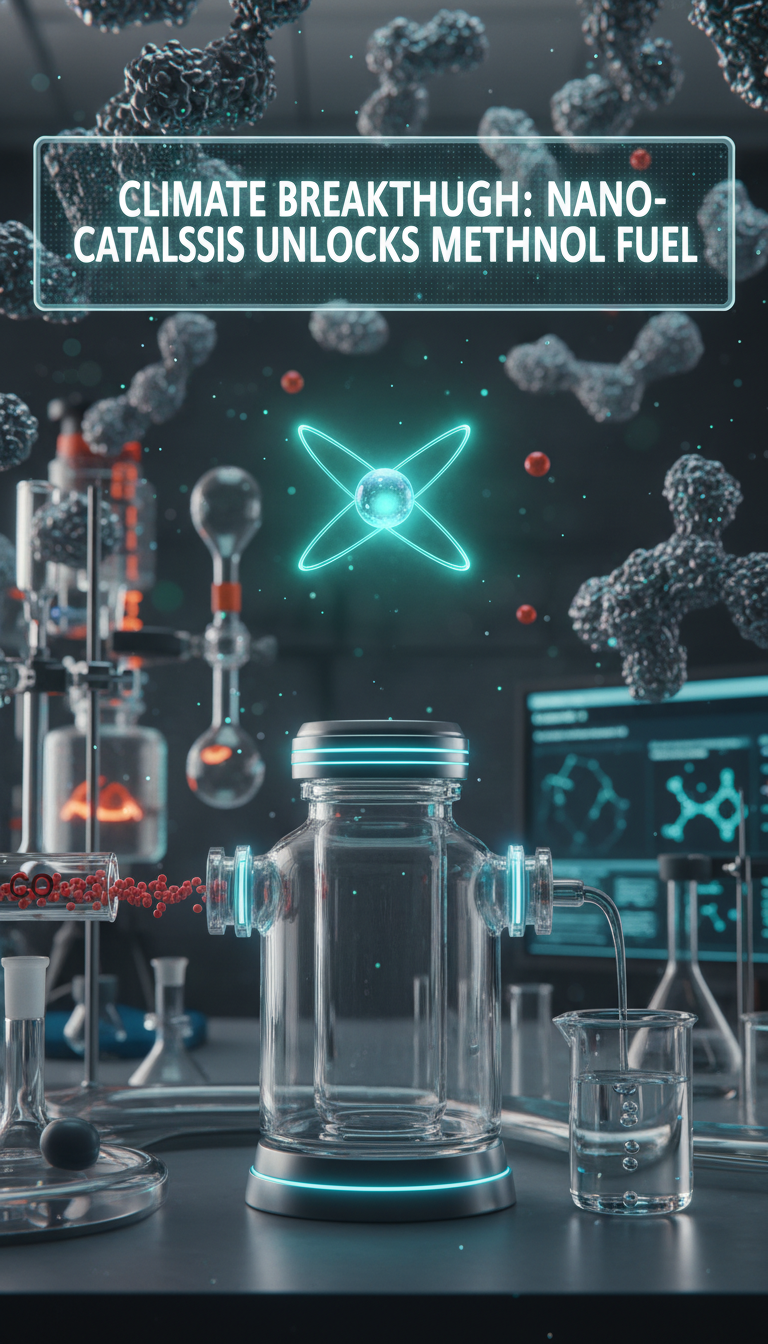
Turning CO2 into methanol sounds almost magical: take a waste greenhouse gas, add hydrogen, and make a useful fuel and chemical feedstock. But the deeper story is not just that a new catalyst performed better. It is why a single indium atom on an unusual oxide support changes the reaction pathway—and why that still does not mean cheap, climate-saving fuel is around the corner.
What the breakthrough actually is
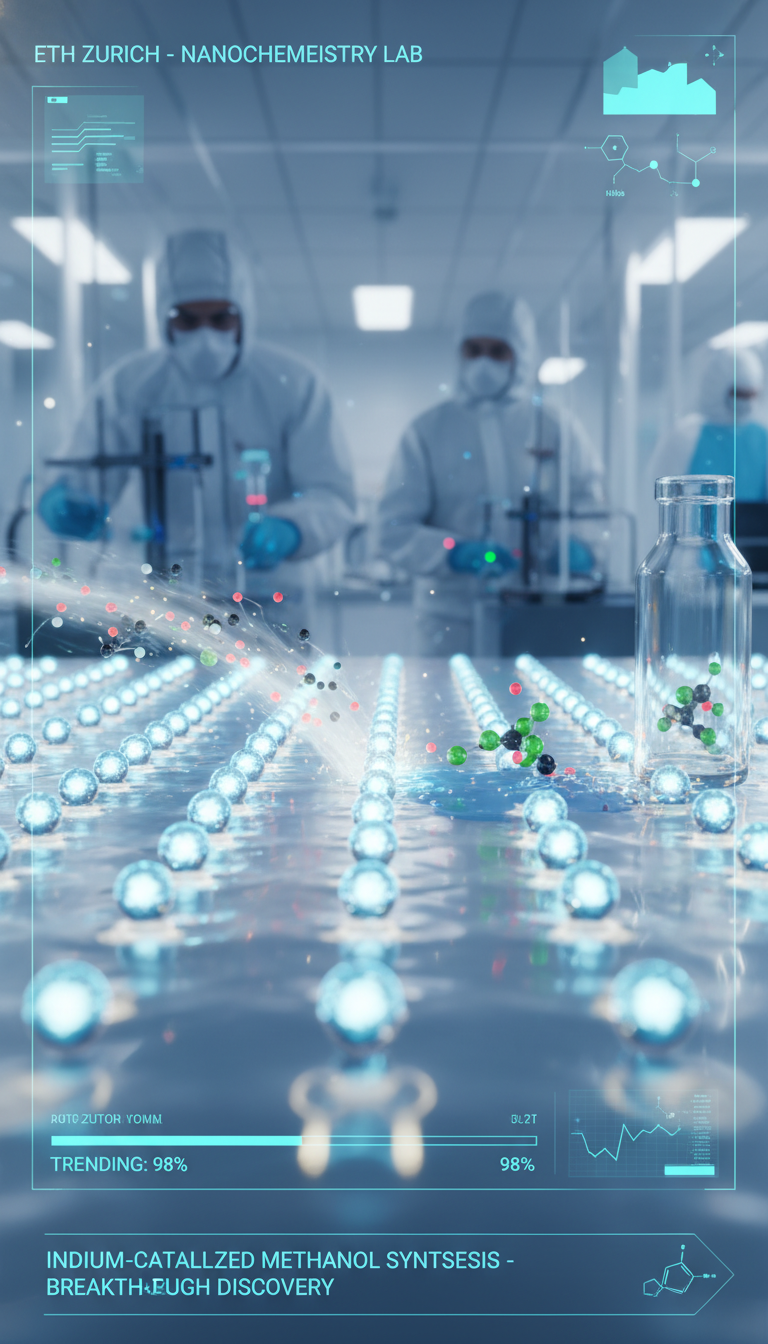
Researchers at ETH Zurich reported a single-atom catalyst in which isolated indium atoms are anchored on monoclinic hafnium oxide, or HfO2. In CO2 hydrogenation to methanol, this system delivered substantially higher indium-specific productivity than a benchmark indium-on-zirconia catalyst under reported test conditions around 300°C and 50 atm.
That matters because single-atom catalysis aims for near-total atom efficiency. In a nanoparticle, many metal atoms sit buried inside and do little direct catalytic work. In a true single-atom catalyst, essentially every metal atom can become an active site. So when isolated indium atoms outperform indium oxide clusters, the gain is not just incremental optimization; it suggests the chemistry at the active site is fundamentally different.
Why hafnium oxide is the surprising hero
The most interesting layer is the support. HfO2 is not the celebrity material in this field; zirconia and copper-based systems get more attention. But monoclinic HfO2 appears to provide an unusually favorable electronic environment.
Because it is a wide-bandgap dielectric, HfO2 helps limit unwanted electron leakage and stabilizes reactive surface species involved in splitting hydrogen. The reported mechanism points to stabilization of hydride-proton pairs: one hydrogen behaves more like H-, the other more like H+. That matters because CO2 is a stubbornly stable molecule. To turn it into methanol, the catalyst must not only activate CO2 but also guide several hydrogenation steps without veering into side products like carbon monoxide.
Explore our free chemistry courses
General Chemistry
University · Chemistry
Organic Chemistry
University · Chemistry

Physical Chemistry
University · Chemistry
Inorganic Chemistry
University · Chemistry
Analytical Chemistry
University · Chemistry

Biochemistry
University · Chemistry
How the mechanism likely boosts methanol selectivity
The proposed picture is that isolated indium atoms sit in flexible coordination environments shaped by nearby oxygen atoms and surface hydroxyl groups on HfO2. This creates something close to a frustrated Lewis pair-like environment: a site arrangement that can polarize and split H2 efficiently while also activating CO2-derived intermediates.
In plain English, the catalyst seems good at doing two hard things at once:
- breaking H2 into chemically useful forms,
- and delivering those hydrogen atoms to the right carbon-oxygen intermediates in the right sequence.
That is why precise surface hydroxylation matters. Too little or too much surface OH can change indium’s coordination, alter H2 activation, and shift selectivity. The support is not just a scaffold holding metal atoms apart; it is an active partner in the reaction mechanism.
Why this does not mean “CO2 to fuel is solved”
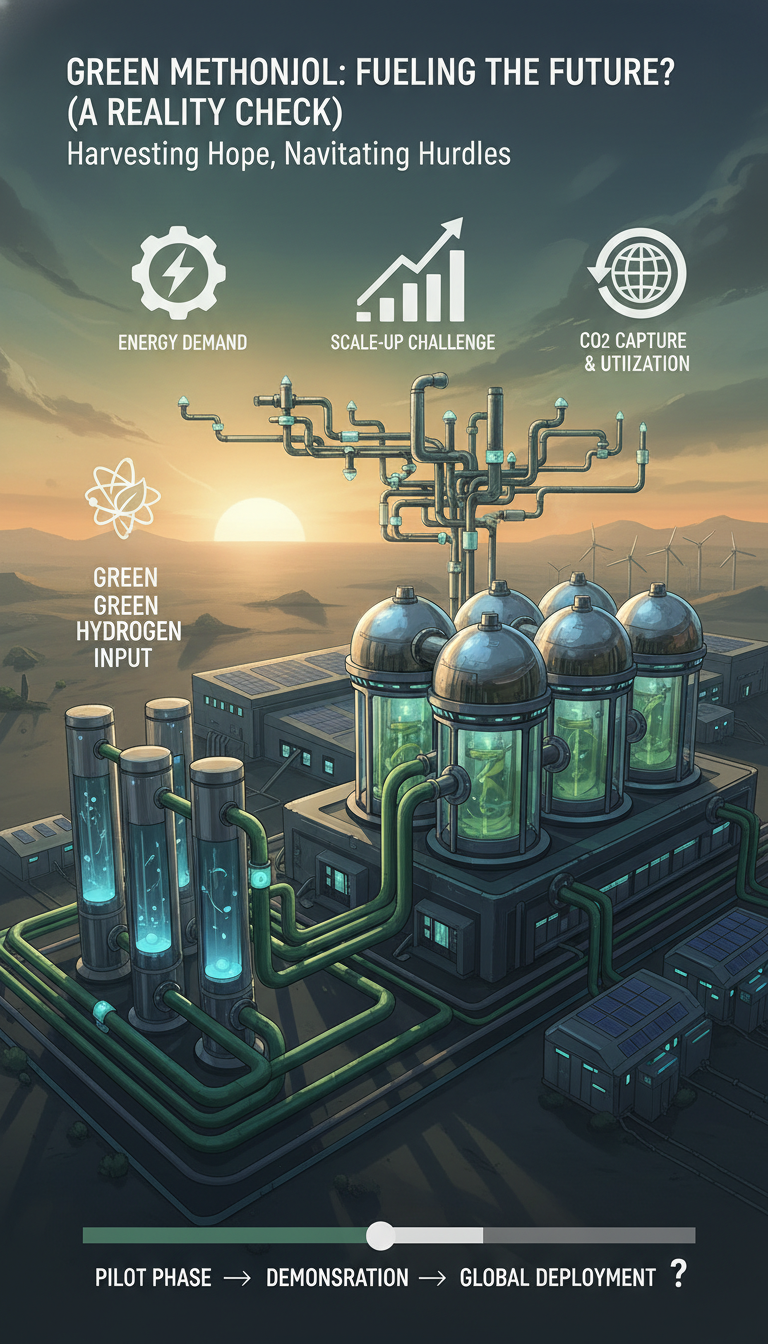
Two realities keep this from being an instant climate solution. First, methanol made from CO2 is only as low-carbon as the hydrogen feeding the process. If the H2 comes from fossil sources, much of the climate benefit disappears. So the catalyst’s real significance depends on access to abundant low-carbon or green hydrogen.
Second, the reaction still needs elevated temperature and pressure. This is not passive “air to fuel.” It is industrial chemistry that consumes energy, requires reactors, and must compete economically with mature methanol processes.
So how could something that works beautifully in a paper fail in practice? The biggest risks are durability and systems integration. A catalyst may look excellent over short runs with clean gases, then degrade over 1000+ hours or under realistic impurities from captured CO2 or syngas streams. Those long-duration data are what industry will care about most.
What happens next—and what experts will watch
The next phase is less about headline novelty and more about proof under industrially relevant constraints. Researchers and companies will want answers to three questions:
- Stability: Can isolated indium atoms stay isolated, or do they migrate and form less active clusters over time?
- Productivity at scale: Do methanol space-time yields remain competitive in larger reactors, not just lab setups?
- Economics: Can HfO2-supported indium compete with established copper-based methanol catalysts once support cost, synthesis, and hydrogen supply are included?
Flame spray pyrolysis may help with scalable synthesis, but “scalable in principle” is not the same as “bankable at plant scale.”
The real significance
This result matters because it sharpens the design rules for carbon-conversion catalysts. It suggests that the best catalyst is not always the one with the most familiar metal or the biggest surface area, but the one whose support can precisely control charge, hydrogen activation, and intermediate binding at a single atom.
So why could a support material change performance this dramatically? Because in single-atom catalysis, the support helps define the active site itself. And what do experts think happens next? Expect intense follow-up on long-term stability, impurity tolerance, and whether these mechanistic insights can be transferred into cheaper, more industrially proven catalyst systems.