

Economics
Mar 21, 2026
Principles of Economics
Microeconomic Theory
Macroeconomic Theory
Econometrics
Statistics for Economics
International Economics
Why the Fed Held Rates in March 2026 — and What Has to Happen Before a Cut
The Federal Reserve left rates unchanged in March 2026 despite a softer labor market and political pressure. Here’s the deeper reason: an oil-driven inflation risk, a more hawkish
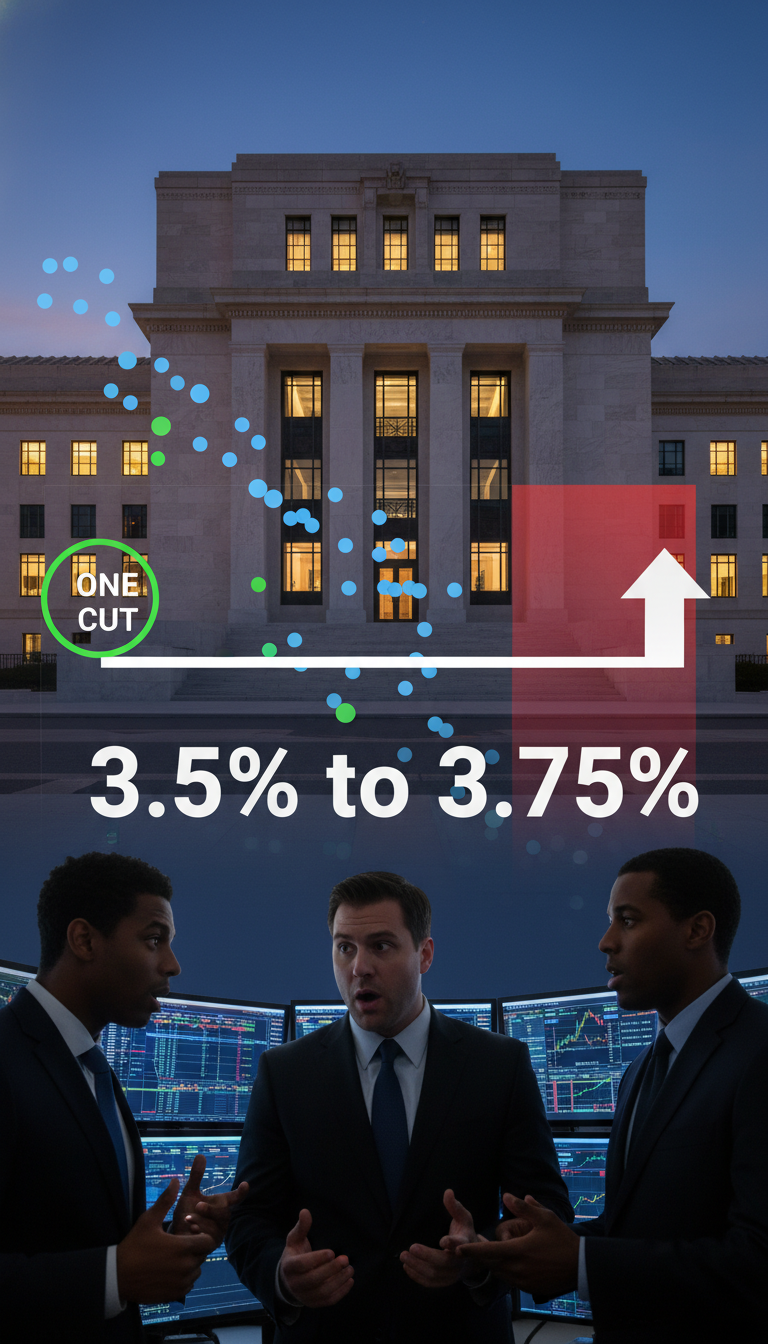
The March 2026 Fed decision looked simple on the surface: rates stayed at 3.5% to 3.75%. But the interesting part is not the hold itself. It is why officials were willing to sit still even as job growth softened, and why they still penciled in one cut later this year despite raising their inflation forecast. The answer sits at the intersection of energy prices, uncertainty, and a subtle but important shift in how the Fed sees the economy’s baseline interest rate.

What the Fed actually decided
On March 18, 2026, the FOMC voted 11-1 to leave the federal funds rate unchanged. The committee described growth as solid, with 2026 GDP projected around 2.4%, while labor-market conditions were no longer as hot as before: job gains had slowed and unemployment was holding at 4.4%. Inflation, however, remained somewhat elevated, with 2026 PCE and core PCE now forecast around 2.7% — higher than the December projections.
That combination matters. A weaker labor market alone would argue for cuts. Higher inflation alone would argue for patience. The Fed is facing both at once, which is why Powell emphasized there is no rush to ease until inflation is moving more convincingly toward 2%.
Why an oil shock changes the Fed’s math
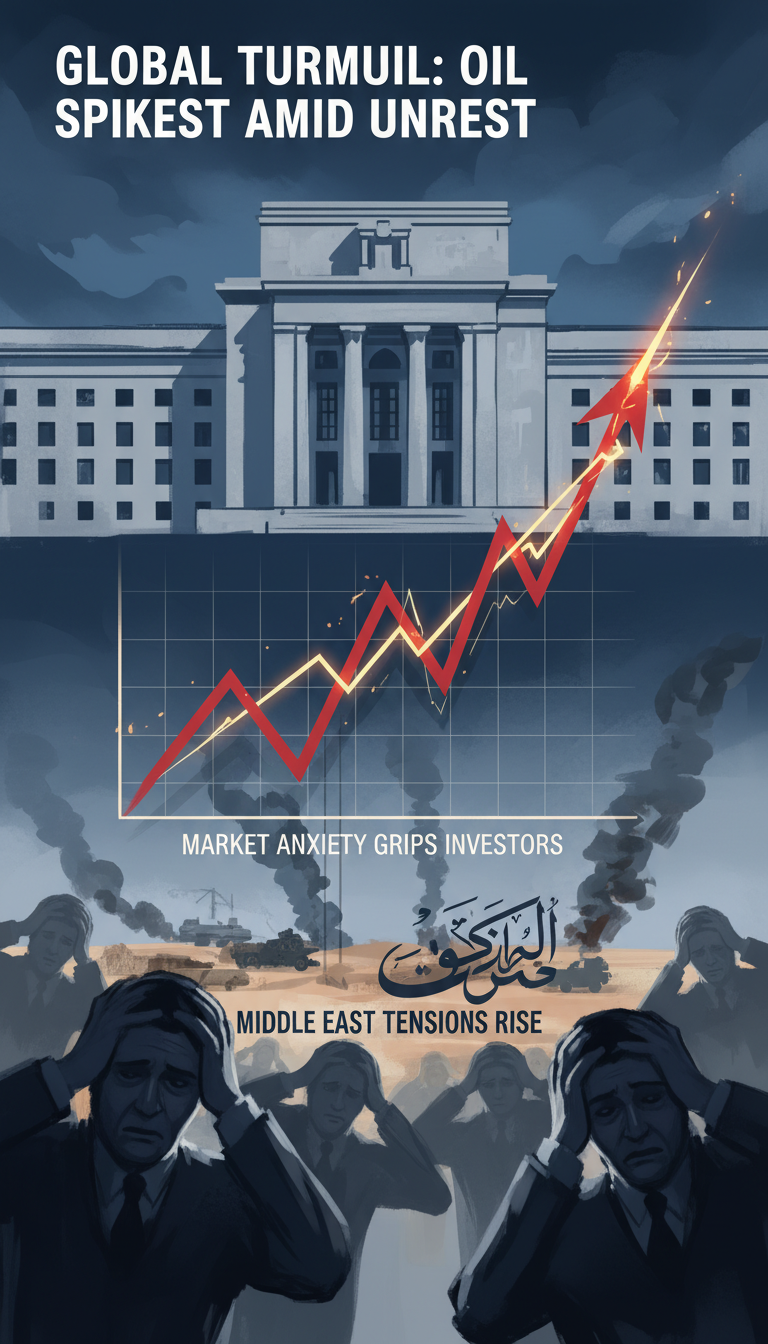
The biggest missing layer is the mechanism. The Iran war matters to the Fed mainly through oil. If conflict disrupts supply, energy prices rise. That first shows up directly in gasoline, transport, and utility costs. But it can also spread indirectly: shipping gets more expensive, firms face higher input costs, and households become more sensitive to price increases elsewhere.
Central banks often try to “look through” temporary energy spikes. But they cannot ignore them when the shock is large, persistent, or arrives while inflation is already above target. That is the key distinction here. The Fed is not saying every oil jump becomes lasting inflation. It is saying the risk of persistence is high enough that cutting too early could re-ignite broader price pressure.
Explore our free economics courses
Principles of Economics
University · Economics
Microeconomic Theory
University · Economics
Macroeconomic Theory
University · Economics

Econometrics
University · Economics
Statistics for Economics
University · Economics

International Economics
University · Economics
So why does the Fed still project one cut in 2026?
This is where many people get confused. One projected cut does not mean a cut is imminent. It means the median official still sees a plausible path in which inflation cools enough later in the year, or labor-market weakness becomes more serious, to justify modest easing.
But the dot plot turned more hawkish beneath the headline. More officials now expect no cuts in 2026 than before. In other words, the center of the committee still allows for one cut, yet the distribution of views has shifted toward caution. Governor Miran’s dissent for an immediate cut shows the debate is real, but he was clearly in the minority.
The practical takeaway is simple: the Fed is preserving flexibility, not promising relief.
What the higher long-run rate really signals
Another underappreciated detail is the increase in the long-run neutral rate to 3.1% from 3.0%. That sounds tiny, but it carries a big message. The neutral rate is the level that neither stimulates nor restrains the economy over time. If officials think that level is drifting higher, then “normal” borrowing costs may also be higher than people got used to in the 2010s.
Why might that happen? Possibilities include stronger productivity from AI, larger fiscal deficits, more volatile global supply conditions, or structurally firmer investment demand. None of these guarantees permanently high rates, but together they make the old ultra-low-rate world look less likely to return soon.

What would need to happen before the Fed cuts?
Two concrete conditions matter most.
- First, inflation pressure must ease in a convincing way. That means not just one softer monthly reading, but evidence that oil-related price pressure is not feeding into broader core inflation.
- Second, the labor market would need to weaken enough to change the balance of risks. Slower hiring alone may not be enough. A clearer rise in unemployment or broader signs of demand cooling would strengthen the case for a cut.
If oil prices stay elevated and inflation expectations remain sticky, the Fed can delay. If energy pressure fades and labor weakness deepens, that single 2026 cut becomes much easier to justify.
What this means for borrowers, savers, and markets
For households, the hold means borrowing relief is still delayed. Mortgage and credit costs are unlikely to fall quickly unless markets become convinced the Fed will move later this year. Savers, by contrast, continue benefiting from relatively high cash yields.
For investors, the message is mixed: growth has held up better than feared, but policy is not turning supportive anytime soon. Markets that priced in easy, fast cuts were forced to confront a harder reality — the Fed is managing an economy that is resilient enough to wait, but inflation-prone enough to be dangerous.

Bottom line
The March 2026 hold was not indecision. It was a response to a specific problem: an economy still growing, a labor market softening but not collapsing, and an oil-driven inflation risk that could linger longer than a normal energy spike. The Fed still sees a path to one cut this year, but only if inflation cools credibly or labor weakness becomes more pronounced. And the higher long-run neutral rate suggests an even deeper shift: rates may not be returning to the old low baseline anytime soon.