


Math
Mar 22, 2026
Calculus I
Calculus II
Calculus III
Linear Algebra
Ordinary Differential Equations
Real Analysis
Why Milky Toners Went Viral: The Math Behind the Surge and Whether It Can Last
Milky toners look like a simple skincare fad, but the numbers tell a bigger story. Here’s what actually drove their explosive growth, why not all formulas are the same, and whether
Milky toners seem easy to explain: soft texture, dewy finish, TikTok hype. But that surface story misses the deeper layer. This trend did not grow just because people liked a white bottle and a “glass skin” promise. It grew because product design, platform behavior, and consumer psychology lined up in a way that made the category unusually shareable. And that is exactly what determines whether a beauty craze becomes a lasting routine step or burns out after one viral cycle.

The headline numbers are big for a reason
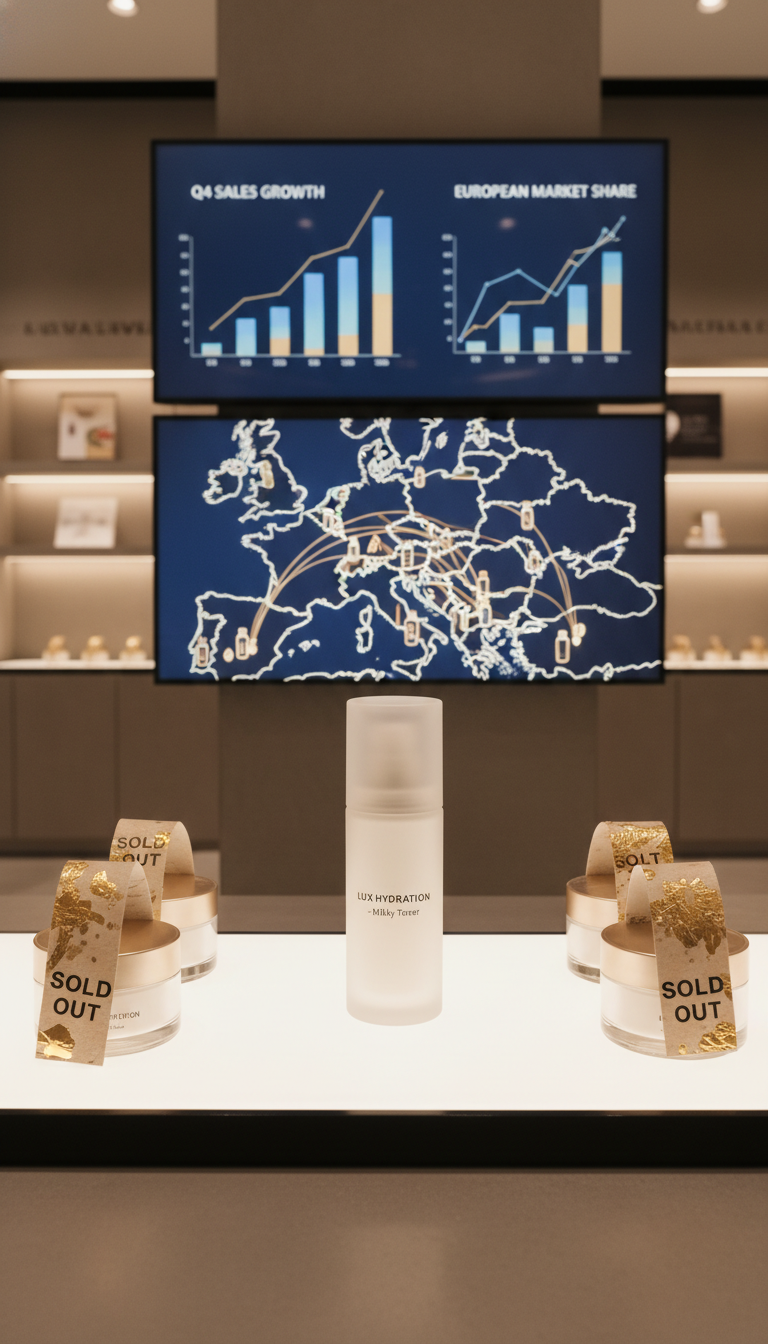
The strongest signal is not one viral post but a cluster of reinforcing metrics. US Google searches for milky toners rose 152.9% year over year in 2024, while TikTok interest grew 61.9%. Spate also projected another 58.9% search increase in 2025. In Europe, Circana reported that milky toners helped drive a 76% rise in new toner product launches. Byoma’s Hydrating Milky Toner became the top-selling product in its niche and helped fuel 44% year-over-year brand sales growth.
That combination matters mathematically. Search growth shows active intent. TikTok growth shows discovery. New product launches show retailer and brand confidence. Sales growth shows conversion. When all four rise together, you are not looking at a meme alone; you are looking at a category formation event.
What actually makes this spread so fast, even when evidence is mixed?
The answer is a kind of “low-friction virality.” Milky toners are easy to demonstrate in short video: viewers can instantly see the texture, the glow, and where the product fits in a routine. That makes them visually legible in under three seconds, which is ideal for social platforms.
They also solve a real consumer tension. Many people want hydration and barrier support, but heavy creams can feel greasy or pore-clogging. A milky toner promises a middle ground: lighter than a moisturizer, more comforting than a watery toner. Even before a buyer understands the ingredient list, the format itself communicates a benefit.
Explore our free math courses

Calculus I
University · Mathematics

Calculus II
University · Mathematics

Calculus III
University · Mathematics

Linear Algebra
University · Mathematics

Ordinary Differential Equations
University · Mathematics

Real Analysis
University · Mathematics
There is also a network effect. Once a few trusted creators show a product layering smoothly under makeup or alongside actives, other creators can reproduce the same result with little effort. That lowers the “content cost” of imitation. In trend math terms, the product has a high replication rate: one post naturally generates many similar posts because the demonstration is simple, aesthetic, and emotionally satisfying.
Why the category is more than a texture trend
A major misconception is that all milky toners are basically the same. They are not. Some lean on ceramides and barrier lipids. Others emphasize rice extract, polyglutamic acid, glycerin, or soothing humectants. Some are almost lotion-like; others are very fluid.
That variation helps explain why the trend has lasted longer than many one-note beauty fads. A category survives when consumers can “trade across” products without leaving the category. Someone who dislikes one formula may still believe in the format and try another. That keeps demand alive even when individual products are called overhyped.
Can 40%+ growth continue into 2026?
Probably not at the same pace forever, but a total collapse is not the most likely outcome either. Viral product curves usually slow for three reasons: market saturation, copycat overload, and disappointment after inflated expectations. Milky toners face all three risks. If every brand launches one, the novelty disappears. If formulas feel interchangeable, price resistance grows. And if buyers expect them to replace moisturizer entirely, some will feel underwhelmed.
But there are also stabilizing forces:
- They fit a durable skincare goal: hydration and barrier support.
- They work across price tiers, from prestige to drugstore.
- They integrate easily into existing routines instead of demanding a full routine reset.
- They benefit from the ongoing influence of K-beauty layering logic.
So the most plausible 2026 scenario is deceleration, not disappearance. In plain terms: growth may taper from breakout levels, but the category could remain strong if brands keep differentiating formulas and avoid overselling them as miracle replacements for moisturizer.
What the trend teaches about beauty math
Milky toners show that beauty virality is not just about hype. The winning formula is often: visible payoff + easy explanation + flexible use case + repeatable creator content. When those variables align, a product can move from niche import to mainstream shelf staple very quickly.
That is also why the trend matters beyond skincare. It is a case study in how modern consumer categories form: not from one claim, but from a feedback loop between social proof, search behavior, retail expansion, and product adaptability.

Conclusion
Milky toners spread fast because they are unusually easy to show, easy to understand, and easy to fit into a routine. Their growth can continue into 2026, but likely at a slower rate as the market matures. The key question is no longer whether the format is viral. It is whether brands can keep the category credible by offering genuinely different formulas instead of endless lookalikes.