

Biology
Mar 19, 2026
Molecular Biology
Genetics
Biochemistry
Cell Biology
Evolutionary Biology
Physiology
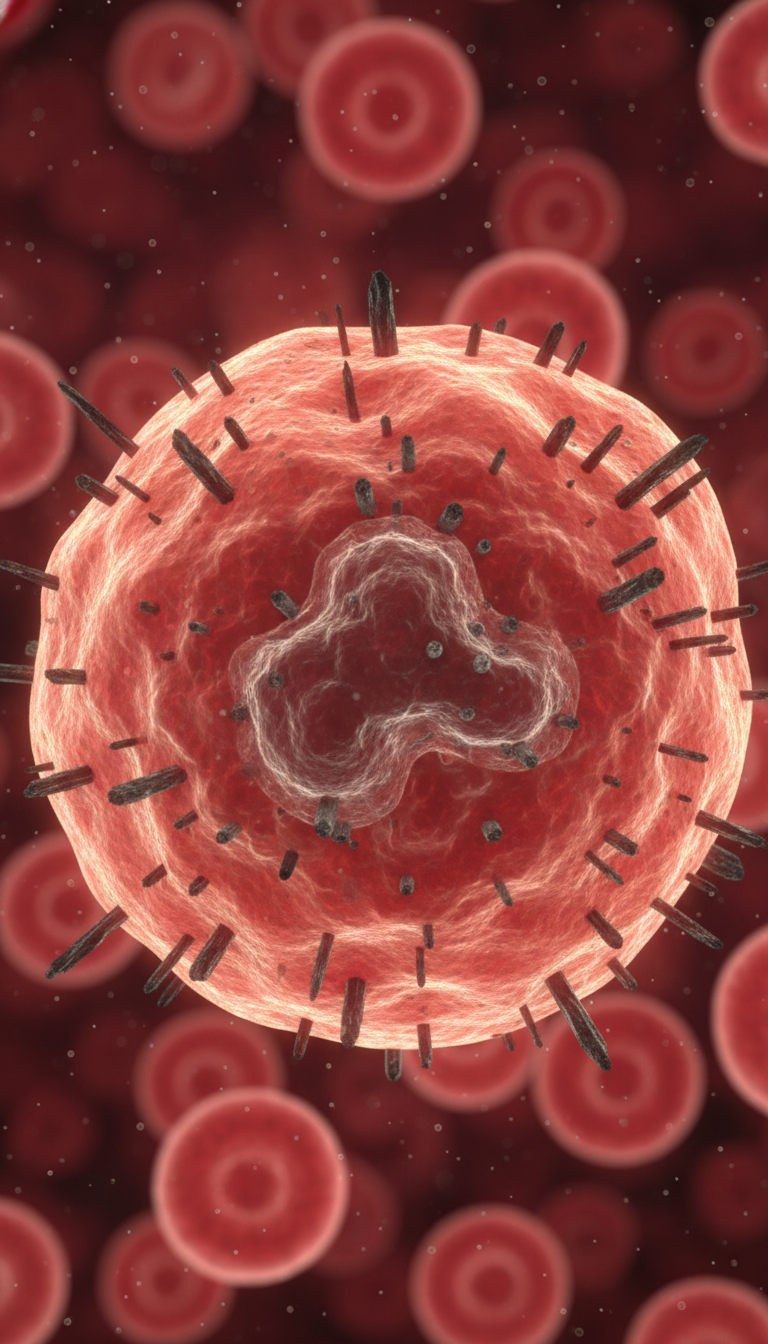
E. coli Without Propellers? The Strange Surface-Spreading Trick Rewriting Bacterial Motility
Researchers have found that E. coli and Salmonella can spread across surfaces even when their flagella are missing or disabled. Here’s why that surprising result matters, how the m
For years, the simple story was that E. coli and Salmonella move with flagella: tiny rotating filaments that act like propellers. So when researchers saw these bacteria spreading across agar even after flagella were removed or disabled, it looked almost impossible. But the deeper surprise is not just that they move without motors. It is that they may be using the physics of wet surfaces to travel in a completely different way.

Why this result is such a big deal
In microbiology, surface movement is usually sorted into familiar categories: swimming in liquid, swarming across surfaces with flagella, or twitching with type IV pili. Wild-type E. coli and Salmonella are not classic twitching bacteria, so a flagella-free spreading behavior does not fit neatly into the old boxes.
That is why researchers have been calling this newly described behavior swashing motility. The name matters because it separates this phenomenon from true twitching. In other words, this is not a hidden pili system suddenly taking over. It appears to be a different kind of surface migration altogether.
What seems to be happening on the surface
The leading idea is that the cells are not actively propelling themselves in the usual sense. Instead, they are being carried outward in a thin hydration film on the agar surface. Think less like a boat with an engine and more like dust drifting on a moving sheet of water.
Several clues point in that direction. Colonies can expand even when the flagellar motor is genetically disabled, or when the flagellar filament itself is absent. Yet the spreading depends on the cells being intact and on the surface conditions being just right. When surfactants such as Tween-20 are added, the behavior collapses, suggesting that surface tension and liquid-film structure are doing much of the work.
Explore our free biology courses

Molecular Biology
University · Biology

Genetics
University · Biology

Biochemistry
University · Biology
Cell Biology
University · Biology

Evolutionary Biology
University · Biology
Physiology
University · Biology
What the short video does not fully explain
1. Why soft agar matters
This behavior shows up on soft agar, where a delicate balance of moisture, friction, and surface structure exists. Too dry, and cells may stick. Too wet, and the system behaves more like ordinary swimming. That means the agar is not just a stage for the experiment; it is part of the mechanism.
2. Why “non-motile” does not mean “immobile”
A common misunderstanding is that if a bacterium lacks a working motor, it must stay put. But biology often piggybacks on physics. If cells can alter or exploit the local surface film, they may still spread as a population even without each cell individually powering forward.
3. Why this is different from a dead-cell effect
If this were just passive debris being washed around, damaged cells should behave similarly. They do not. Intact cells are required, which hints that cell shape, surface chemistry, or subtle interactions with the hydration layer are essential.
A concrete example of why this matters
Imagine a moist intestinal surface, a medical device, or a food-processing environment. A strain with impaired flagella might seem less capable of spreading. But if it can still move across a thin wet film, it may continue colonizing new territory, finding nutrients, and seeding early biofilm formation.
That has an important consequence: losing flagella may not always weaken a pathogen as much as expected. In some contexts, it could even help persistence, because flagella can trigger host immune recognition and can mechanically interfere with mature biofilm stability.

The biofilm connection is especially intriguing
Biofilms are one of the hardest bacterial lifestyles to eliminate. They protect cells from antibiotics, disinfectants, and immune attack. If E. coli or Salmonella can spread over a surface without obvious propulsion, they may be able to quietly establish the first patches of a biofilm even when classic motility is compromised.
This also creates an edge case for researchers: a mutant labeled “non-motile” in one assay may still be quite capable of surface colonization in another. That could affect how labs interpret virulence, environmental persistence, and antimicrobial testing.

A paradigm shift hiding in plain sight
The most exciting part of this story is that it blurs the line between biology and physics. We tend to imagine movement as something powered by a motor, but microbes can also exploit hydration, surface tension, and material properties of their environment. That makes bacterial behavior harder to predict, but also more fascinating.
If future work confirms the mechanism in more realistic settings, this finding could reshape how we think about infection spread on tissues, contamination on surfaces, and the early steps of biofilm formation. Sometimes the biggest scientific surprise is not that life invented a new machine. It is that life learned how to ride the environment instead.
So yes, the headline is real: E. coli and Salmonella may spread without flagella. But the deeper lesson is even more interesting. These bacteria may not need to push themselves forward if the surface itself can help carry them.