

Medicine
Mar 21, 2026
Human Anatomy
Human Physiology
Biochemistry
Pathology
Pharmacology
Clinical Skills
Ozempic Is Going Generic for Billions. Here’s What That Really Changes — and What It Doesn’t
Semaglutide patents have expired in several major countries, opening the door to cheap generics for a huge share of the world. The real story is not just lower prices, but how acce
At first glance, this looks like a simple price story: a blockbuster drug gets cheaper when patents expire. But with semaglutide, the deeper layer is bigger. In several countries, generic versions could expand access for hundreds of millions of people with diabetes or obesity. At the same time, the rollout creates real questions about quality control, prescribing, side effects, and why the U.S. remains largely outside this shift.
What changed, exactly?
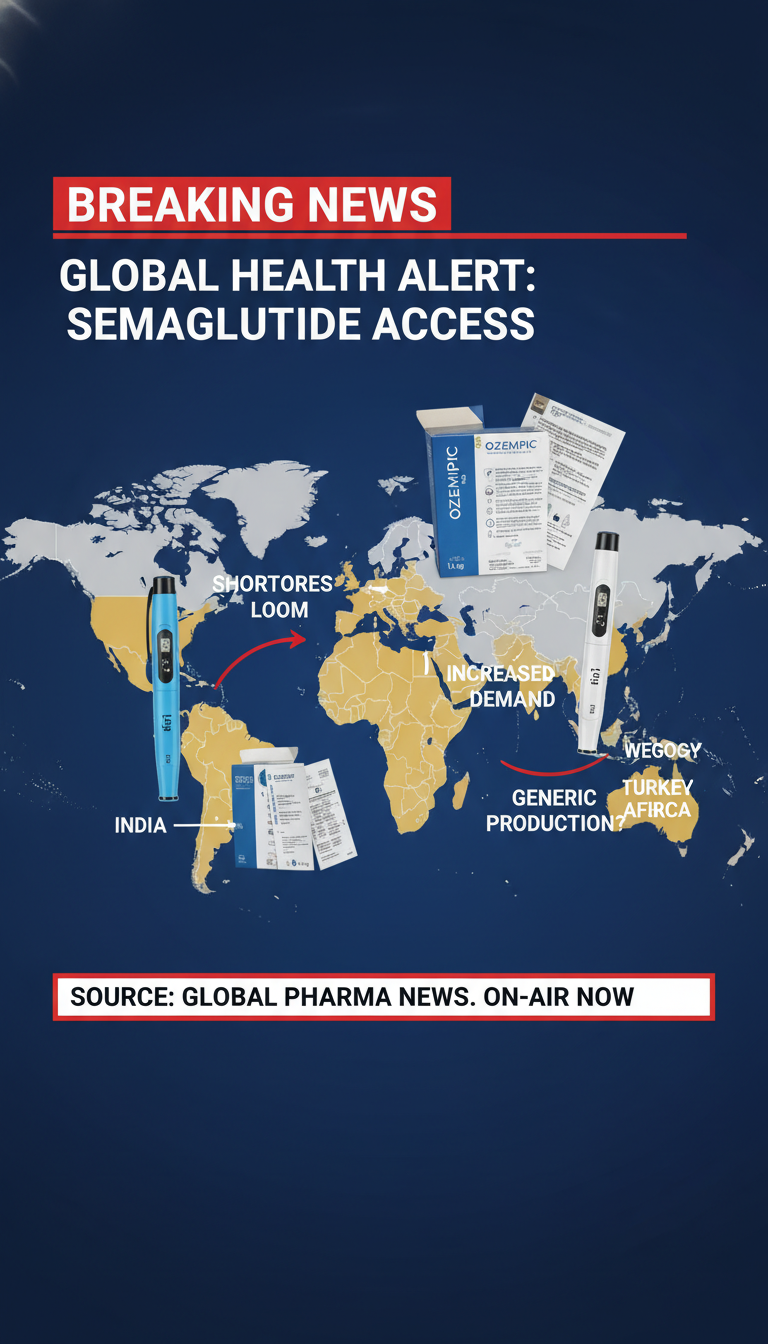
Semaglutide is the active ingredient in Ozempic for type 2 diabetes and Wegovy for obesity. Patent expirations in countries including India, China, Canada, Brazil, Turkey, and South Africa mean manufacturers there may now be able to launch generic versions, depending on local regulatory approval and any remaining legal disputes.
That matters because these markets include a huge share of the world’s population and a massive burden of obesity and diabetes. In India alone, reports suggest more than 50 generic brands are preparing to launch, with monthly prices potentially dropping from roughly $100 to $170 for branded products to around $15 to $30 at first, and possibly lower over time.
So yes, the headline is real: semaglutide may become dramatically more affordable for billions of potential users outside the U.S.
Why can the price fall so fast?
The main reason is competition. When one company no longer has exclusive patent protection in a market, multiple manufacturers can produce the same active ingredient. That usually drives prices down quickly, especially in countries with strong generic industries such as India.
But the drop is not magic. It depends on three practical factors:
- Manufacturing capacity: Can companies reliably make injectable semaglutide at scale?
- Regulatory approval: Do local authorities verify quality, sterility, dosing accuracy, and bioequivalence?
- Distribution and prescribing rules: Is the drug reaching the right patients under medical supervision?
That is why “generic available” does not mean “problem solved.” Cheap supply helps only if the product is trustworthy and used correctly.
Explore our free medicine courses

Human Anatomy
University · Medicine

Human Physiology
University · Medicine

Biochemistry
University · Medicine

Pathology
University · Medicine

Pharmacology
University · Medicine

Clinical Skills
University · Medicine
What are the biggest risks in a rapid generic rollout?
The most immediate risk is misuse. Semaglutide is not a casual wellness product. It often causes nausea, vomiting, diarrhea, and constipation, especially if dosing is increased too quickly. More serious risks can include pancreatitis, gallbladder disease, allergic reactions, and possible thyroid C-cell tumor concerns reflected in U.S. boxed warnings.
That is why proper titration matters: patients usually start low and increase gradually under clinician guidance. In markets where prescription enforcement is uneven, lower prices could increase unsupervised use for cosmetic weight loss or inappropriate self-dosing.
A second risk is quality variation. A legitimate generic approved by a national regulator is very different from a counterfeit product or an unregulated compounded copy. Not all lower-cost versions are equal, and foreign generics are not automatically reviewed by the U.S. FDA.
Why can’t Americans just buy the cheaper versions?
Because U.S. patent and drug approval rules are different. The common misconception is that “generic Ozempic exists now,” full stop. It does not in the United States. Key patent protections there are expected to last much longer, and there are currently no FDA-approved generic semaglutide injections equivalent to Ozempic or Wegovy available for normal U.S. pharmacy purchase.
Even if a generic is legally sold abroad, importing it into the U.S. is generally not lawful for routine personal use, and shipments can be seized. That leaves many Americans in a frustrating position: the same molecule may become cheap elsewhere while branded U.S. prices remain above $1,000 per month.

Could this actually change population health?
Potentially, yes. If affordable semaglutide reaches patients with obesity and type 2 diabetes at scale, the upside is not just weight loss. Studies of this drug class suggest benefits can extend to blood sugar control and, in some patients, reduced cardiovascular risk. In countries facing enormous burdens of metabolic disease, that could translate into fewer heart attacks, strokes, and diabetes complications.
But population benefit depends on systems, not just molecules. Health gains will be larger if countries pair access with:
- doctor supervision and follow-up,
- screening for contraindications and side effects,
- reliable supply chains, and
- clear rules against counterfeit or misleading products.
Without those guardrails, lower prices could also produce more emergency visits for preventable side effects and more public confusion about what counts as a safe generic.
What happens next?
The next phase will likely be uneven. Some countries may see rapid price competition and broad uptake. Others may move more slowly because of regulatory reviews, manufacturing bottlenecks, or legal challenges. Novo Nordisk may respond with pricing strategies, newer formulations, or market segmentation rather than simply surrendering demand.
The deeper truth is that generic semaglutide is not just a pharma business story. It is a test of whether health systems can turn a scientific breakthrough into safe mass access.
Bottom line: Semaglutide going generic could make one of the most important metabolic drugs in the world affordable for billions of people. The price drop happens because patent barriers are falling and competition can enter. Americans still cannot simply buy those versions because U.S. patents and FDA rules are different. The promise is enormous, but so are the stakes around supervision, quality, and safe use.