

Geology
Mar 23, 2026
Geochemistry
Geophysics
Historical Geology
Mineralogy
Petrology
Physical Geology
Did Scientists Really Find a New U.S. Quake Hotspot? What the Mendocino Study Actually Changed
A new study did not discover a brand-new earthquake hotspot off Northern California. It revealed something more important: the Mendocino Triple Junction is made of five moving tect
The most interesting part of the new Mendocino Triple Junction research is not that scientists found a mysterious new place where earthquakes can happen. They already knew this offshore Northern California region was one of the most complicated and dangerous plate-boundary zones in the United States. The deeper story is that tiny, previously overlooked tremors revealed the crust and upper mantle there are organized in a far messier way than the classic three-plate picture suggested.
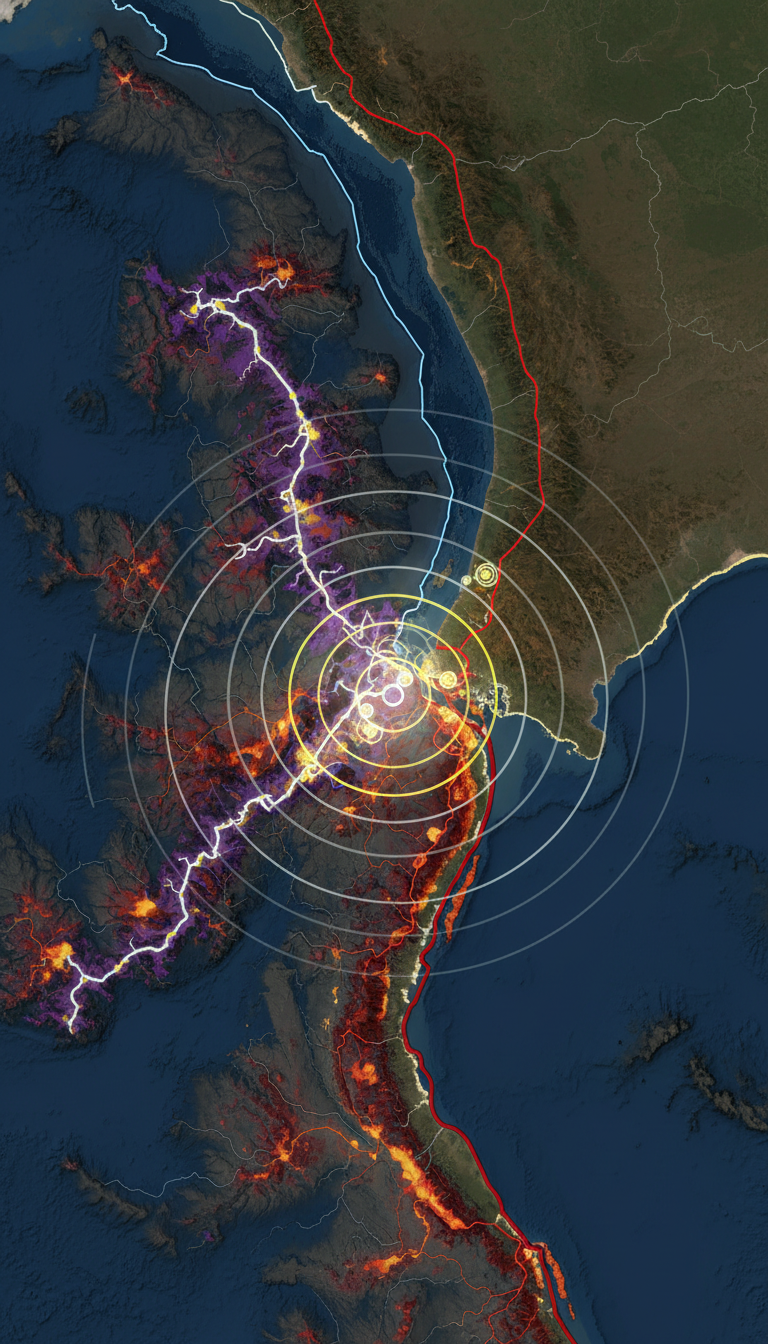
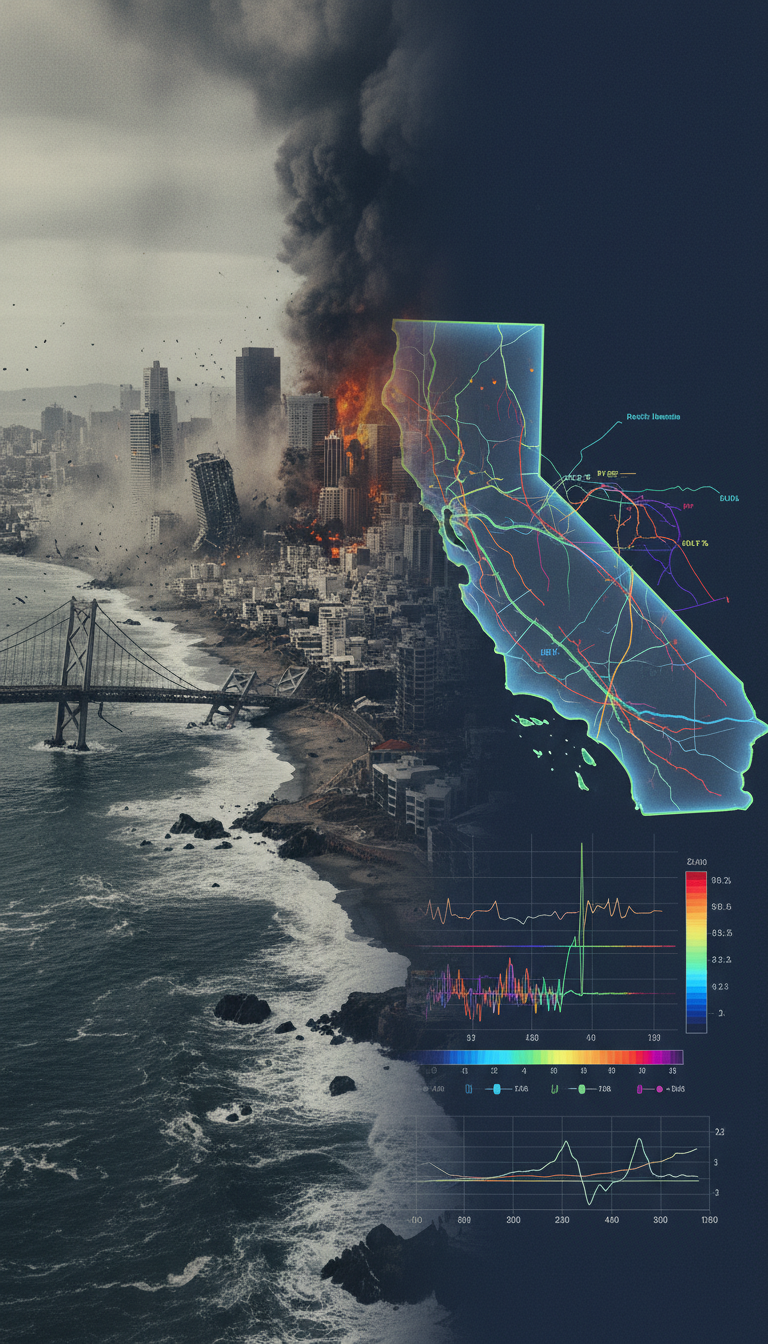
That matters because earthquake hazard depends on where stress is stored, how faults connect, and how rupture can jump between structures. The study improves that map. It does not announce an imminent magnitude 8 earthquake, but it does give scientists a better framework for understanding why this junction behaves so strangely.
What the study actually discovered
The Mendocino Triple Junction, or MTJ, is where the Pacific Plate, the Gorda segment of the Juan de Fuca system, and the North American Plate meet. The new study argues that this is too simple. Using swarms of tiny low-frequency earthquakes, researchers identified five moving tectonic pieces, including:
- the Pacific Plate,
- the Gorda Plate,
- the main North American Plate,
- a detached chunk of North America moving down with the subducting slab, and
- the ancient Pioneer fragment, sliding horizontally beneath North America.
So the headline-worthy change is not “new hotspot discovered.” It is “the underground architecture is more fragmented than expected.” That is a major scientific update because plate-boundary models are the basis for seismic hazard calculations.
How tiny earthquakes exposed hidden faults
The key evidence came from low-frequency earthquakes and tremor-like signals, many thousands of times weaker than quakes people feel. These events often occur where rocks are slipping in a more complex, fluid-rich, or transitional way than ordinary brittle faulting.
Explore our free geology courses

Geochemistry: Principles and Applications
Free course

Geophysics Fundamentals and Applications
Free course
Historical Geology: Earth's Past Through Time
Free course

Introduction to Mineralogy
Free course
Petrology: Igneous, Sedimentary, and Metamorphic Rocks
Free course

Physical Geology
Free course
By locating many of these tiny signals, scientists could trace boundaries that were effectively invisible in older models. They also found that some of this seismicity responds to tidal stressing. That is important because tides produce very small stress changes, so if earthquake activity rises and falls with them, the fault zone is likely already close to failure and mechanically sensitive.
In this case, tidal sensitivity supported the idea of shallower and differently oriented subduction-related structures than geologists had assumed. In other words, the tremors were not just noise. They were a map.
Why this helps explain the 1992 Cape Mendocino earthquake
One long-standing puzzle was the 1992 magnitude 7.2 Cape Mendocino earthquake, which appeared unusually shallow for the standard tectonic picture. The revised geometry offers a cleaner explanation: rupture may have occurred on one of these newly resolved, shallower structures rather than on the simpler plate interface many models emphasized.
That does not just solve a historical mystery. It shows that hidden fragments can change where large earthquakes are physically plausible within the junction.
Does this mean magnitude 8 earthquakes are now expected?
Not from this study alone. Sensational headlines blur an important distinction between mapping a fault system better and predicting a specific future earthquake size. The MTJ has long been recognized as hazardous because it links the San Andreas system to the Cascadia subduction zone. Scientists already knew it was capable of complex, damaging earthquakes.
What changes now is the hazard model input:
- more realistic fault geometry,
- better estimates of which structures can store stress,
- improved understanding of how stress may transfer across the junction, and
- a stronger basis for testing multi-fault rupture scenarios.
That could eventually alter probabilistic forecasts, but it does not justify saying the study newly proved an M8 is coming soon.
How could this affect forecasts and Cascadia questions?
The two biggest open implications are exactly the ones hazard scientists now need to test. First, how does a five-fragment system change earthquake probabilities? A more segmented system can either limit rupture in some places or create new pathways for stress concentration in others. The answer requires updated numerical models, not headlines.
Second, what does this mean for interaction between the San Andreas side and Cascadia side of the junction? Hidden faults may help transfer stress in ways older three-plate models missed. That does not mean one giant combined rupture is suddenly expected, but it does mean the MTJ may be a more important mediator between tectonic systems than previously represented.

The real takeaway
The Mendocino study is a reminder that earthquake risk often changes not because Earth suddenly becomes more dangerous, but because our map of the machinery gets better. Scientists did not discover a brand-new seismic hotspot. They discovered a more intricate engine beneath a place that was already known to matter. The practical result is not panic. It is better hazard science, sharper questions about stress transfer, and a more honest picture of how Northern California’s most complex tectonic junction actually works.